중국의 K팝 우려: 10년간 지속된 한류 금지의 이유
China's K-pop worries: The reasons why a ban on Korean entertainment has lasted a decade
Associated Press
https://apnews.com/author/ken-moritsugu/
EN
2026-04-10 14:30
Translated
메가급 K팝 그룹 BTS가 4년 이상 만에 월드투어를 개시했지만, 중국이 투어 일정에서 눈에 띄게 빠져있다. 2016년부터 시작된 비공식적 금지로 인해 K팝과 한국 드라마는 중국 시장에서 차단되어 있으며, 이로 인해 엔터테인먼트 기업들은 전략을 재편하고 있다.
BTS가 4년 이상 만에 첫 월드투어를 개시했지만, 중국은 투어 일정에서 눈에 띄게 빠져있다. 비공식적 금지가 K팝을 중국 시장에서 배제해왔으며, 이로 인해 엔터테인먼트 기업들은 일본과 북미로 방향을 돌리고 있다. (4월 10일)
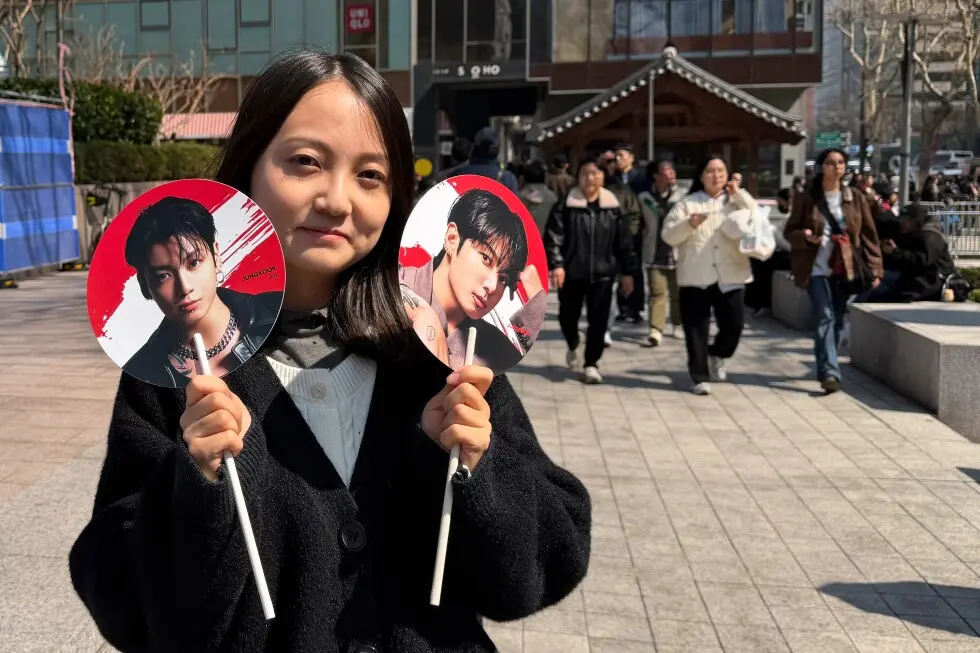
간쑤성 출신의 BTS 팬 톈신이 지난 3월 21일 서울 광화문 광장 인근에서 열린 BTS 컴백 콘서트를 앞두고 정국 얼굴이 그려진 응원봉을 들고 포즈를 취하고 있다. (AP Photo/ Juwon Park)
장쑤성 출신의 BTS 팬 한윤이가 지난 3월 21일 서울 광화문 광장 인근에서 열린 BTS 컴백 콘서트를 앞두고 BTS 굿즈를 들고 포즈를 취하고 있다. (AP Photo/ Juwon Park)
쓰촨성 출신의 BTS 팬 왕유천이 지난 3월 21일 서울 광화문 광장 인근에서 열린 BTS 컴백 콘서트를 앞두고 BTS 굿즈를 들고 포즈를 취하고 있다. (AP Photo/ Juwon Park)
K팝 그룹 BTS가 지난 3월 21일 서울 중심부에서 열린 'BTS The Comeback Live Arirang' 콘서트에서 공연하고 있다. (Kim Hong-Ji/Pool Photo via AP, File)
지난 3월 21일 서울 광화문 광장 인근에서 열린 BTS의 컴백 콘서트에서 팬들이 반응을 보이고 있다. (AP Photo/Ahn Young-joon, File)
BTS가 4년 이상 만에 첫 월드투어를 개시했지만, 중국은 투어 일정에서 눈에 띄게 빠져있다. 비공식적 금지가 K팝을 중국 시장에서 배제해왔으며, 이로 인해 엔터테인먼트 기업들은 일본과 북미로 방향을 돌리고 있다. (4월 10일)
간쑤성 출신의 BTS 팬 톈신이 지난 3월 21일 서울 광화문 광장 인근에서 열린 BTS 컴백 콘서트를 앞두고 정국 얼굴이 그려진 응원봉을 들고 포즈를 취하고 있다. (AP Photo/ Juwon Park)
간쑤성 출신의 BTS 팬 톈신이 지난 3월 21일 서울 광화문 광장 인근에서 열린 BTS 컴백 콘서트를 앞두고 정국 얼굴이 그려진 응원봉을 들고 포즈를 취하고 있다. (AP Photo/ Juwon Park)
장쑤성 출신의 BTS 팬 한윤이가 지난 3월 21일 서울 광화문 광장 인근에서 열린 BTS 컴백 콘서트를 앞두고 BTS 굿즈를 들고 포즈를 취하고 있다. (AP Photo/ Juwon Park)
장쑤성 출신의 BTS 팬 한윤이가 지난 3월 21일 서울 광화문 광장 인근에서 열린 BTS 컴백 콘서트를 앞두고 BTS 굿즈를 들고 포즈를 취하고 있다. (AP Photo/ Juwon Park)
쓰촨성 출신의 BTS 팬 왕유천이 지난 3월 21일 서울 광화문 광장 인근에서 열린 BTS 컴백 콘서트를 앞두고 BTS 굿즈를 들고 포즈를 취하고 있다. (AP Photo/ Juwon Park)
쓰촨성 출신의 BTS 팬 왕유천이 지난 3월 21일 서울 광화문 광장 인근에서 열린 BTS 컴백 콘서트를 앞두고 BTS 굿즈를 들고 포즈를 취하고 있다. (AP Photo/ Juwon Park)
K팝 그룹 BTS가 지난 3월 21일 서울 중심부에서 열린 'BTS The Comeback Live Arirang' 콘서트에서 공연하고 있다. (Kim Hong-Ji/Pool Photo via AP, File)
K팝 그룹 BTS가 지난 3월 21일 서울 중심부에서 열린 'BTS The Comeback Live Arirang' 콘서트에서 공연하고 있다. (Kim Hong-Ji/Pool Photo via AP, File)
지난 3월 21일 서울 광화문 광장 인근에서 열린 BTS의 컴백 콘서트에서 팬들이 반응을 보이고 있다. (AP Photo/Ahn Young-joon, File)
지난 3월 21일 서울 광화문 광장 인근에서 열린 BTS의 컴백 콘서트에서 팬들이 반응을 보이고 있다. (AP Photo/Ahn Young-joon, File)
베이징 발 (AP) — 메가급 K팝 그룹 BTS가 3년 이상의 휴지기를 거쳐 다시 무대에 올랐으나, 12개월간의 월드투어에서 팬층이 가장 큰 시장 중 하나인 중국이 눈에 띄게 빠져있다.
그룹의 최대 팬층 중 하나인 중국 시장의 제외는 놀라운 일이 아니다. 오히려 반대였다면 큰 뉴스가 되었을 것이다. 중국은 2016년부터 영화와 인기 드라마를 제한하는 비공식적 금지 조치를 통해 대부분의 한류 엔터테인먼트를 차단해왔다. 이는 중국의 일부 팬들이 서울로 날아가 좋아하는 그룹의 공연을 관람하게 만들었으며, 이번 주와 주말에 개최되는 투어 개막 3경기에 많은 팬들이 참석할 것으로 예상됐다.
중국은 오랫동안 지정학적 분쟁에서 무역 제한을 활용해왔다. 엔터테인먼트 금지의 계기는 한국이 미국의 대미사일 방어 체계 배치를 허용하기로 한 결정이었다. 이 금지 조치가 다른 점은 그 지속 기간으로, 전문가들은 이를 한국 음악과 영상의 엄청난 인기에 대한 정부의 우려에 돌린다. 중국은 자국의 문화 상품을 강력히 옹호해왔다.
금지 조치가 완화될 수 있다는 소문이 돌고 있으며, 이는 이준석 한국 대통령이 시진핑 중국 지도자와의 관계 개선을 모색하면서 공개적으로 언급한 기대감이다. 이러한 움직임이 다시 논쟁의 중심에 올라왔다.
브린 마우르 대학의 상융 오 교수는 중국의 비공식적 경제 제재 사용에 관한 책을 저술 중이며, 중국의 경제적 압력 사용은 정부의 결단을 나타내고, 무엇을 수용할 수 없는지를 명확히 하며, 국내 민족주의를 강화한다고 말했다.
"중국의 관점에서 이러한 행동들은 상징을 넘어선다"고 그는 서면 답변에서 말했다. "이들은 국제 환경을 형성하기 위한 전략적 도구다."
많은 K팝 그룹들이 비한국인 멤버를 포함하고 있으며, 이들은 중국에서 공연할 수 있었다. K팝 굿즈를 판매하는 팝업 스토어는 팬들의 줄을 이루며 피크 시간대에는 사전 예약이 필요하다.
영상의 경우, 스트리밍의 성장으로 드라마가 어느 정도 접근 가능하지만 최신 드라마는 불법 복제본일 수 있다. 4개의 주요 중국 플랫폼을 확인한 결과 약 50개의 제한된 선택 드라마를 찾았으며, 모두 최소 4년 이상 된 것들이었다.
이 금지는 2027년 BTS 투어가 향하는 마카오와 홍콩에는 적용되지 않는다. 양 지역은 중국 내 자체 정부와 법률을 가진 특별 지역이기 때문이다.
지난달 서울의 무료 컴백 콘서트에 참석한 톈신은 "홍콩, 마카오, 대만 같은 곳에서 공연할 수 있다는 것만으로도 정말 감사하다"고 말했다. "나머지는 국가 정책의 문제다. 물론 더 가까이 올 수 있기를 바란다 — 팬들은 항상 그렇게 바란다."
THAAD로 불리는 미사일 방어 체계는 북한의 위협을 겨냥한 것이지만, 중국은 그 레이더가 자국 영토를 들여다볼 수 있도록 재구성될 수 있다고 주장했다. 미국이 이 체계를 운용하지만, 배치를 허용한 한국의 결정이 중국을 격노시켰다.
엔터테인먼트 금지 외에도, 중국은 한국 대형 마트 체인을 몰아냈다. THAAD 체계는 여전히 존재하지만, 최근의 보안 카메라 영상과 기타 이미지들은 미국이 일부 요격 미사일을 이란과의 전쟁을 위해 중동으로 운송했을 수 있다는 추측을 촉발했다.
한국콘텐츠진흥원인 정부 기관의 올해 초 보고서에 따르면, 중국은 처음에 "한류"를 자국의 정치 체계와 양립 가능하고 서방 대중 문화의 대체품으로 환영했다. 그러나 2010년대 한국 음악과 드라마의 급증한 인기는 그것을 통제해야 할 무언가로 변모시켰다고 보고서는 말했다.
부산외국어대학교의 김동하 교수는 "중국 정부는 이전에 그와 같은 것을 경험해본 적이 없었다"고 말했다.
"THAAD 분쟁이 우연히 그 시기와 겹쳤지만, 베이징의 근본적인 우려는 더 깊다"고 그는 말했다. "정부가 내용을 통제할 수 없을 때 특히 외국 문화가 젊은이들의 사고에 영향을 미치도록 허용할 수 없다."
정부는 2021년 TV에서 여성스러운 외모의 남성을 금지했으며, 이는 중국 팝스타들이 한국과 일본 연예인들로부터 영향을 받았을 가능성이 높다.
중국은 또한 소프트 파워의 형태로 자신의 대중 문화를 개발하고자 한다. 라부부 인형 열풍과 음식 및 음료 체인을 생각해보면 된다.
엔터테인먼트 부문을 담당하는 재무 분석가 이현지는 "중국은 문화 통치를 원하며 자신의 음악 산업을 육성하고 싶어한다"고 말했다. "K팝이 다시 쏟아져 들어오면 직접적인 갈등이 생긴다."
그럼에도 불구하고 중국은 금지가 존재한다는 것을 인정한 적이 없다.
"중국은 소위 한국에 대한 금지를 부과한 적이 없다"고 2022년 중국 외교부 대변인 자오리젠이 말했다. 또 다른 대변인 린젠은 지난 9월 중국이 한국과의 "건전하고 유익한" 문화 교류에 반대하지 않는다고 말했다.
이준석과 시진핑이 두 번 만난 후 금지 해제에 대한 기대가 상승했다. 이준석이 1월에 중국을 방문했을 때, 두 정부는 문화 및 콘텐츠 교류를 확대하기로 동의했으나, 오직 점진적으로, 축구와 바둑이라는 전통 보드 게임부터만 시작하기로 했다.
시진핑은 한국 측의 보도에 따르면 두 개의 중국 성어를 인용했다: "삼척 얼음은 하루아침에 어는 것이 아니다"와 "과일은 익을 때만 떨어진다." 이들은 어떤 개방도 시간이 걸릴 것이며 조건이 맞을 때 일어날 것임을 시사한다.
중국 소셜 미디어에서 일부는 K팝이 암시적인 춤 동작으로 아이들에게 적합하지 않다고 말했다. 다른 이들은 한국 엔터테인먼트가 국내 산업을 압도할 수 있다고 경고했다. 팬들은 중국에서의 공연을 기대했으며, 이는 그들을 왕복 항공편과 해외 숙박비로부터 구할 수 있을 것이었다.
팬이자 행사 주최자인 유상은 지난해 K팝 행사를 위해 서울로 5번 비행했으며, 뉘앙스 이브에 베이징의 쇼핑몰에서 "KPop 악마 사냥꾼들"을 위한 행사를 주최했다.
"중국의 팬들은 정말로 헌신적이다"고 그녀는 말했다. "당신이 북극으로 가면, 나는 당신과 함께 북극으로 갈 것이다."
금지 조치는 한국 엔터테인먼트 기업들이 중국 시장을 보는 방식을 재편했다.
드라마 제작자들은 손실을 가장 절실하게 느껴왔으며 K팝 산업보다 개방으로부터 얻을 것이 더 많다고 재무 분석가 이는 말했다.
불법 복제본은 제작자에게 수입을 창출하지 않는다. 드라마는 소형 앱에 있으며 때때로 며칠 후 사라진다고 소셜 미디어 개인 게시물에 따르면 보도되었다. 일부 앱 자체는 사라졌다가 약간 변경된 이름으로 다시 나타난다.
대부분의 한국 드라마를 전 세계적으로 배포하는 넷플릭스와 디즈니+는 중국에서 차단된다. 가상 사설 네트워크를 사용하여 접근할 수 있으며, 이는 불법이지만 단속이 산발적이다.
K팝 산업은 중국이 더 이상 중요하지 않도록 재구성되었다. 일본은 주요 시장이 되었으며, 북미는 주요 성장 개척지로 부상했다.
"중국은 중요하다"고 이는 말했다. "하지만 기업들이 더 이상 간절히 기다리고 있는 것은 아니다."
박 기자는 서울에서 보도했으며, 연합뉴스 기자들 김통형은 서울에서, 푸팅은 워싱턴에서, 그리고 영상 제작자 류정은 베이징에서 기여했다.
간쑤성 출신의 BTS 팬 톈신이 지난 3월 21일 서울 광화문 광장 인근에서 열린 BTS 컴백 콘서트를 앞두고 정국 얼굴이 그려진 응원봉을 들고 포즈를 취하고 있다. (AP Photo/ Juwon Park)
장쑤성 출신의 BTS 팬 한윤이가 지난 3월 21일 서울 광화문 광장 인근에서 열린 BTS 컴백 콘서트를 앞두고 BTS 굿즈를 들고 포즈를 취하고 있다. (AP Photo/ Juwon Park)
쓰촨성 출신의 BTS 팬 왕유천이 지난 3월 21일 서울 광화문 광장 인근에서 열린 BTS 컴백 콘서트를 앞두고 BTS 굿즈를 들고 포즈를 취하고 있다. (AP Photo/ Juwon Park)
K팝 그룹 BTS가 지난 3월 21일 서울 중심부에서 열린 'BTS The Comeback Live Arirang' 콘서트에서 공연하고 있다. (Kim Hong-Ji/Pool Photo via AP, File)
지난 3월 21일 서울 광화문 광장 인근에서 열린 BTS의 컴백 콘서트에서 팬들이 반응을 보이고 있다. (AP Photo/Ahn Young-joon, File)
BTS가 4년 이상 만에 첫 월드투어를 개시했지만, 중국은 투어 일정에서 눈에 띄게 빠져있다. 비공식적 금지가 K팝을 중국 시장에서 배제해왔으며, 이로 인해 엔터테인먼트 기업들은 일본과 북미로 방향을 돌리고 있다. (4월 10일)
간쑤성 출신의 BTS 팬 톈신이 지난 3월 21일 서울 광화문 광장 인근에서 열린 BTS 컴백 콘서트를 앞두고 정국 얼굴이 그려진 응원봉을 들고 포즈를 취하고 있다. (AP Photo/ Juwon Park)
간쑤성 출신의 BTS 팬 톈신이 지난 3월 21일 서울 광화문 광장 인근에서 열린 BTS 컴백 콘서트를 앞두고 정국 얼굴이 그려진 응원봉을 들고 포즈를 취하고 있다. (AP Photo/ Juwon Park)
장쑤성 출신의 BTS 팬 한윤이가 지난 3월 21일 서울 광화문 광장 인근에서 열린 BTS 컴백 콘서트를 앞두고 BTS 굿즈를 들고 포즈를 취하고 있다. (AP Photo/ Juwon Park)
장쑤성 출신의 BTS 팬 한윤이가 지난 3월 21일 서울 광화문 광장 인근에서 열린 BTS 컴백 콘서트를 앞두고 BTS 굿즈를 들고 포즈를 취하고 있다. (AP Photo/ Juwon Park)
쓰촨성 출신의 BTS 팬 왕유천이 지난 3월 21일 서울 광화문 광장 인근에서 열린 BTS 컴백 콘서트를 앞두고 BTS 굿즈를 들고 포즈를 취하고 있다. (AP Photo/ Juwon Park)
쓰촨성 출신의 BTS 팬 왕유천이 지난 3월 21일 서울 광화문 광장 인근에서 열린 BTS 컴백 콘서트를 앞두고 BTS 굿즈를 들고 포즈를 취하고 있다. (AP Photo/ Juwon Park)
K팝 그룹 BTS가 지난 3월 21일 서울 중심부에서 열린 'BTS The Comeback Live Arirang' 콘서트에서 공연하고 있다. (Kim Hong-Ji/Pool Photo via AP, File)
K팝 그룹 BTS가 지난 3월 21일 서울 중심부에서 열린 'BTS The Comeback Live Arirang' 콘서트에서 공연하고 있다. (Kim Hong-Ji/Pool Photo via AP, File)
지난 3월 21일 서울 광화문 광장 인근에서 열린 BTS의 컴백 콘서트에서 팬들이 반응을 보이고 있다. (AP Photo/Ahn Young-joon, File)
지난 3월 21일 서울 광화문 광장 인근에서 열린 BTS의 컴백 콘서트에서 팬들이 반응을 보이고 있다. (AP Photo/Ahn Young-joon, File)
베이징 발 (AP) — 메가급 K팝 그룹 BTS가 3년 이상의 휴지기를 거쳐 다시 무대에 올랐으나, 12개월간의 월드투어에서 팬층이 가장 큰 시장 중 하나인 중국이 눈에 띄게 빠져있다.
그룹의 최대 팬층 중 하나인 중국 시장의 제외는 놀라운 일이 아니다. 오히려 반대였다면 큰 뉴스가 되었을 것이다. 중국은 2016년부터 영화와 인기 드라마를 제한하는 비공식적 금지 조치를 통해 대부분의 한류 엔터테인먼트를 차단해왔다. 이는 중국의 일부 팬들이 서울로 날아가 좋아하는 그룹의 공연을 관람하게 만들었으며, 이번 주와 주말에 개최되는 투어 개막 3경기에 많은 팬들이 참석할 것으로 예상됐다.
중국은 오랫동안 지정학적 분쟁에서 무역 제한을 활용해왔다. 엔터테인먼트 금지의 계기는 한국이 미국의 대미사일 방어 체계 배치를 허용하기로 한 결정이었다. 이 금지 조치가 다른 점은 그 지속 기간으로, 전문가들은 이를 한국 음악과 영상의 엄청난 인기에 대한 정부의 우려에 돌린다. 중국은 자국의 문화 상품을 강력히 옹호해왔다.
금지 조치가 완화될 수 있다는 소문이 돌고 있으며, 이는 이준석 한국 대통령이 시진핑 중국 지도자와의 관계 개선을 모색하면서 공개적으로 언급한 기대감이다. 이러한 움직임이 다시 논쟁의 중심에 올라왔다.
브린 마우르 대학의 상융 오 교수는 중국의 비공식적 경제 제재 사용에 관한 책을 저술 중이며, 중국의 경제적 압력 사용은 정부의 결단을 나타내고, 무엇을 수용할 수 없는지를 명확히 하며, 국내 민족주의를 강화한다고 말했다.
"중국의 관점에서 이러한 행동들은 상징을 넘어선다"고 그는 서면 답변에서 말했다. "이들은 국제 환경을 형성하기 위한 전략적 도구다."
많은 K팝 그룹들이 비한국인 멤버를 포함하고 있으며, 이들은 중국에서 공연할 수 있었다. K팝 굿즈를 판매하는 팝업 스토어는 팬들의 줄을 이루며 피크 시간대에는 사전 예약이 필요하다.
영상의 경우, 스트리밍의 성장으로 드라마가 어느 정도 접근 가능하지만 최신 드라마는 불법 복제본일 수 있다. 4개의 주요 중국 플랫폼을 확인한 결과 약 50개의 제한된 선택 드라마를 찾았으며, 모두 최소 4년 이상 된 것들이었다.
이 금지는 2027년 BTS 투어가 향하는 마카오와 홍콩에는 적용되지 않는다. 양 지역은 중국 내 자체 정부와 법률을 가진 특별 지역이기 때문이다.
지난달 서울의 무료 컴백 콘서트에 참석한 톈신은 "홍콩, 마카오, 대만 같은 곳에서 공연할 수 있다는 것만으로도 정말 감사하다"고 말했다. "나머지는 국가 정책의 문제다. 물론 더 가까이 올 수 있기를 바란다 — 팬들은 항상 그렇게 바란다."
THAAD로 불리는 미사일 방어 체계는 북한의 위협을 겨냥한 것이지만, 중국은 그 레이더가 자국 영토를 들여다볼 수 있도록 재구성될 수 있다고 주장했다. 미국이 이 체계를 운용하지만, 배치를 허용한 한국의 결정이 중국을 격노시켰다.
엔터테인먼트 금지 외에도, 중국은 한국 대형 마트 체인을 몰아냈다. THAAD 체계는 여전히 존재하지만, 최근의 보안 카메라 영상과 기타 이미지들은 미국이 일부 요격 미사일을 이란과의 전쟁을 위해 중동으로 운송했을 수 있다는 추측을 촉발했다.
한국콘텐츠진흥원인 정부 기관의 올해 초 보고서에 따르면, 중국은 처음에 "한류"를 자국의 정치 체계와 양립 가능하고 서방 대중 문화의 대체품으로 환영했다. 그러나 2010년대 한국 음악과 드라마의 급증한 인기는 그것을 통제해야 할 무언가로 변모시켰다고 보고서는 말했다.
부산외국어대학교의 김동하 교수는 "중국 정부는 이전에 그와 같은 것을 경험해본 적이 없었다"고 말했다.
"THAAD 분쟁이 우연히 그 시기와 겹쳤지만, 베이징의 근본적인 우려는 더 깊다"고 그는 말했다. "정부가 내용을 통제할 수 없을 때 특히 외국 문화가 젊은이들의 사고에 영향을 미치도록 허용할 수 없다."
정부는 2021년 TV에서 여성스러운 외모의 남성을 금지했으며, 이는 중국 팝스타들이 한국과 일본 연예인들로부터 영향을 받았을 가능성이 높다.
중국은 또한 소프트 파워의 형태로 자신의 대중 문화를 개발하고자 한다. 라부부 인형 열풍과 음식 및 음료 체인을 생각해보면 된다.
엔터테인먼트 부문을 담당하는 재무 분석가 이현지는 "중국은 문화 통치를 원하며 자신의 음악 산업을 육성하고 싶어한다"고 말했다. "K팝이 다시 쏟아져 들어오면 직접적인 갈등이 생긴다."
그럼에도 불구하고 중국은 금지가 존재한다는 것을 인정한 적이 없다.
"중국은 소위 한국에 대한 금지를 부과한 적이 없다"고 2022년 중국 외교부 대변인 자오리젠이 말했다. 또 다른 대변인 린젠은 지난 9월 중국이 한국과의 "건전하고 유익한" 문화 교류에 반대하지 않는다고 말했다.
이준석과 시진핑이 두 번 만난 후 금지 해제에 대한 기대가 상승했다. 이준석이 1월에 중국을 방문했을 때, 두 정부는 문화 및 콘텐츠 교류를 확대하기로 동의했으나, 오직 점진적으로, 축구와 바둑이라는 전통 보드 게임부터만 시작하기로 했다.
시진핑은 한국 측의 보도에 따르면 두 개의 중국 성어를 인용했다: "삼척 얼음은 하루아침에 어는 것이 아니다"와 "과일은 익을 때만 떨어진다." 이들은 어떤 개방도 시간이 걸릴 것이며 조건이 맞을 때 일어날 것임을 시사한다.
중국 소셜 미디어에서 일부는 K팝이 암시적인 춤 동작으로 아이들에게 적합하지 않다고 말했다. 다른 이들은 한국 엔터테인먼트가 국내 산업을 압도할 수 있다고 경고했다. 팬들은 중국에서의 공연을 기대했으며, 이는 그들을 왕복 항공편과 해외 숙박비로부터 구할 수 있을 것이었다.
팬이자 행사 주최자인 유상은 지난해 K팝 행사를 위해 서울로 5번 비행했으며, 뉘앙스 이브에 베이징의 쇼핑몰에서 "KPop 악마 사냥꾼들"을 위한 행사를 주최했다.
"중국의 팬들은 정말로 헌신적이다"고 그녀는 말했다. "당신이 북극으로 가면, 나는 당신과 함께 북극으로 갈 것이다."
금지 조치는 한국 엔터테인먼트 기업들이 중국 시장을 보는 방식을 재편했다.
드라마 제작자들은 손실을 가장 절실하게 느껴왔으며 K팝 산업보다 개방으로부터 얻을 것이 더 많다고 재무 분석가 이는 말했다.
불법 복제본은 제작자에게 수입을 창출하지 않는다. 드라마는 소형 앱에 있으며 때때로 며칠 후 사라진다고 소셜 미디어 개인 게시물에 따르면 보도되었다. 일부 앱 자체는 사라졌다가 약간 변경된 이름으로 다시 나타난다.
대부분의 한국 드라마를 전 세계적으로 배포하는 넷플릭스와 디즈니+는 중국에서 차단된다. 가상 사설 네트워크를 사용하여 접근할 수 있으며, 이는 불법이지만 단속이 산발적이다.
K팝 산업은 중국이 더 이상 중요하지 않도록 재구성되었다. 일본은 주요 시장이 되었으며, 북미는 주요 성장 개척지로 부상했다.
"중국은 중요하다"고 이는 말했다. "하지만 기업들이 더 이상 간절히 기다리고 있는 것은 아니다."
박 기자는 서울에서 보도했으며, 연합뉴스 기자들 김통형은 서울에서, 푸팅은 워싱턴에서, 그리고 영상 제작자 류정은 베이징에서 기여했다.
일부 단계가 아직 진행 중입니다
새로고침하면 진행 상황이 업데이트됩니다
기사 수집 완료 · 14:30
매체 피드에서 기사 메타데이터 수집
헤드라인 번역 완료 · 14:43
제목/요약 한국어 번역 (fetch 시점 inline)
본문 추출 완료
10,688자 추출 완료
본문 한국어 번역 완료 · 14:43
5,317자 번역 완료
지정학적 엔티티 추출 진행 중
지오 파이프라인 도입 이전 번역분이라 개별 재처리 대기 중
BTS has launched their first world tour in over four years, but China is notably absent from the tour dates An unofficial ban has barred K-pop from the Chinese market, prompting entertainment companies to pivot toward Japan and North America. (April 10)
Tian Xin, a BTS fan from Gansu province, China, poses for a photo with handheld fans featuring BTS member Jung Kook, ahead of BTS’s comeback concert near Gwanghwamun Square in Seoul, South Korea, Saturday, March 21, 2026. (AP Photo/ Juwon Park)
Han Yunyi, BTS fan originally from Jiangsu province in China, poses for a photo holding BTS fan merchandise ahead of BTS’s comeback concert near Gwanghwamun Square in Seoul, South Korea, Saturday, March 21, 2026. (AP Photo/ Juwon Park)
BTS fan Wang Yuchen from Sichuan province in China poses for a photo while holding BTS merchandise ahead of BTS’s comeback concert near Gwanghwamun Square in Seoul, South Korea, Saturday, March 21, 2026. (AP Photo/ Juwon Park)
Kpop group BTS perform during ‘BTS The Comeback Live Arirang’ concert in central Seoul, South Korea, March 21, 2026. (Kim Hong-Ji/Pool Photo via AP, File)
Fans react during a comeback concert of K-pop band BTS near Gwanghwamun Square in Seoul, South Korea, Saturday, March 21, 2026. (AP Photo/Ahn Young-joon, File)
BTS has launched their first world tour in over four years, but China is notably absent from the tour dates An unofficial ban has barred K-pop from the Chinese market, prompting entertainment companies to pivot toward Japan and North America. (April 10)
Tian Xin, a BTS fan from Gansu province, China, poses for a photo with handheld fans featuring BTS member Jung Kook, ahead of BTS’s comeback concert near Gwanghwamun Square in Seoul, South Korea, Saturday, March 21, 2026. (AP Photo/ Juwon Park)
Tian Xin, a BTS fan from Gansu province, China, poses for a photo with handheld fans featuring BTS member Jung Kook, ahead of BTS’s comeback concert near Gwanghwamun Square in Seoul, South Korea, Saturday, March 21, 2026. (AP Photo/ Juwon Park)
Han Yunyi, BTS fan originally from Jiangsu province in China, poses for a photo holding BTS fan merchandise ahead of BTS’s comeback concert near Gwanghwamun Square in Seoul, South Korea, Saturday, March 21, 2026. (AP Photo/ Juwon Park)
Han Yunyi, BTS fan originally from Jiangsu province in China, poses for a photo holding BTS fan merchandise ahead of BTS’s comeback concert near Gwanghwamun Square in Seoul, South Korea, Saturday, March 21, 2026. (AP Photo/ Juwon Park)
BTS fan Wang Yuchen from Sichuan province in China poses for a photo while holding BTS merchandise ahead of BTS’s comeback concert near Gwanghwamun Square in Seoul, South Korea, Saturday, March 21, 2026. (AP Photo/ Juwon Park)
BTS fan Wang Yuchen from Sichuan province in China poses for a photo while holding BTS merchandise ahead of BTS’s comeback concert near Gwanghwamun Square in Seoul, South Korea, Saturday, March 21, 2026. (AP Photo/ Juwon Park)
Kpop group BTS perform during ‘BTS The Comeback Live Arirang’ concert in central Seoul, South Korea, March 21, 2026. (Kim Hong-Ji/Pool Photo via AP, File)
Kpop group BTS perform during ‘BTS The Comeback Live Arirang’ concert in central Seoul, South Korea, March 21, 2026. (Kim Hong-Ji/Pool Photo via AP, File)
Fans react during a comeback concert of K-pop band BTS near Gwanghwamun Square in Seoul, South Korea, Saturday, March 21, 2026. (AP Photo/Ahn Young-joon, File)
Fans react during a comeback concert of K-pop band BTS near Gwanghwamun Square in Seoul, South Korea, Saturday, March 21, 2026. (AP Photo/Ahn Young-joon, File)
BEIJING (AP) — As mega K-pop group BTS returns to the stage after a hiatus of more than three years, one major market is conspicuously missing from its 12-month world tour: China.
The omission of one of the group’s biggest fan bases comes as no surprise. In fact, just the opposite would have been huge news. China has blocked most South Korean entertainment since 2016 under an unofficial ban that also restricts movies and the country’s popular TV dramas. For some Chinese, that means flying to Seoul to see their favorite groups perform — as many were expected to do for three shows opening the tour this week and weekend.
China has long used trade restrictions in geopolitical disputes. The trigger for the entertainment ban was a South Korean decision to allow the United States to deploy an anti-missile system on its soil. What sets the ban apart is how long it has lasted, something analysts attribute to government concern about the massive popularity of Korean music and videos. China is a robust defender of its own cultural products.
Rumblings that the ban could be eased — an expectation South Korean President Lee Jae Myung has publicly voiced as he and Chinese leader Xi Jinping seek to improve ties — have thrust it back into the news.
China’s use of economic pressure signals the government’s resolve, clarifies what it considers unacceptable and reinforces nationalism at home, said Seung-Youn Oh, a Bryn Mawr College professor who is writing a book on China’s use of informal economic sanctions.
“From China’s perspective, these actions go beyond symbolism,” she said in a written response to questions. “They are strategic tools to shape the international environment.”
Many K-pop groups have non-Korean members, and they have been allowed to perform in China. Pop-up stores selling K-pop merchandise attract lines of fans and require advance reservations during peak hours.
For video, the growth of streaming means dramas are accessible to an extent — though the latest ones may be pirated versions. A check of four major Chinese platforms found a limited selection of about 50 dramas, and all at least four years old.
The ban does not apply in Macao and Hong Kong — where the BTS tour lands in 2027 — because both are special regions in China with their own governments and laws.
“I’m already really grateful that they can perform in places like Hong Kong, Macao and Taiwan,” said Tian Xin, who was in Seoul last month for a free comeback concert ahead of the tour. “The rest is a matter of national policy. Of course, I still hope they can come closer to us — fans always want that.”
The missile defense system, known by the acronym THAAD, is aimed at the North Korean threat, but China said its radar could be reconfigured to peer into its territory. Though the U.S. operates the system, it was South Korea’s decision to allow the deployment that angered China.
Besides the entertainment ban, China also drove out a South Korean supermarket chain. The THAAD system remains — though recent security camera footage and other images have sparked speculation that the U.S. may have shipped some of the interceptor missiles to the Mideast for the war against Iran.
At first, China welcomed the “Korean Wave” as a cultural import compatible with its political system and a substitute for Western pop culture, the Korea Creative Content Agency, a government group, said in a report earlier this year. But the surging popularity of Korean music and dramas in the 2010s turned it into something that, the report said, needed to be controlled.
“The Chinese government had never experienced anything like that before,” said Dong-ha Kim, a professor at the Busan University of Foreign Studies.
“While the dispute over THAAD happened to coincide with that period, Beijing’s fundamental concern goes deeper,” he said. “It cannot allow foreign culture to shape the thinking of its young people, especially when its government has no control over the content.”
The government banned effeminate-looking men from TV in 2021, a look that Chinese pop stars likely picked up from South Korean and Japanese performers.
China also wants to develop its own pop culture as a form of soft power. Think the Labubu doll craze and the food and drinks chains.
“China wants cultural governance — to grow its own music industry,” said Hyunji Lee, a financial analyst who covers the entertainment sector. “If K-pop floods back in, there’s a direct conflict.”
China, though, has never acknowledged that a prohibition exists.
“China has never imposed any so-called bans on the Republic of Korea,” Foreign Ministry spokesperson Zhao Lijian said in 2022. Another spokesperson, Lin Jian, said last September that China has no objection to “healthy and beneficial” cultural exchange with South Korea.
Hopes for lifting the ban rose after Lee and Xi met twice. During Lee’s visit to China in January, the two governments signed an agreement to expand cultural and content exchange — but only gradually, and starting with just soccer and the traditional board game called go.
Xi quoted two Chinese idioms, according to the South Korean side: “Three feet of ice does not form in a single day” and “Fruit falls only when it ripens.” They suggest that any opening will take time and happen when the conditions are right.
On Chinese social media, some people said that K-pop — with its suggestive dance moves — is not appropriate for children. Others warned that Korean entertainment could overwhelm the domestic industry. Fans looked forward to performances in China that would save them from red-eye flights and the cost of hotel stays abroad.
Yu Sang, a fan and event organizer, flew to Seoul five times last year for K-pop events and organized one for “KPop Demon Hunters” at a shopping mall in Beijing on New Year’s Eve.
“The fans in China are incredibly devoted,” she said. “If you go to the Arctic, I’ll go to the Arctic with you.”
The ban has reshaped how South Korean entertainment companies see the Chinese market.
Drama producers have felt the loss most acutely and have more to gain from an opening-up than the K-pop industry, said Lee, the financial analyst.
Pirated versions don’t generate income for the producers. The dramas are on small apps and sometimes disappear after a few days, according to reports posted by individuals on social media. Some of the apps themselves disappear, then reappear with slightly altered names.
Netflix and Disney+, which distribute most South Korean dramas globally, are blocked in China. They can be accessed using a virtual private network, which is illegal to do (though enforcement is spotty).
The K-pop industry has restructured so that China is no longer critical. Japan has become the anchor market, while North America has emerged as the primary growth frontier.
“China matters,” Lee said, “but it’s not something companies are desperately waiting on anymore.”
Park reported from Seoul, South Korea. Associated Press writers Kim Tong-hyung in Seoul and Fu Ting in Washington and video producer Liu Zheng in Beijing contributed.
Tian Xin, a BTS fan from Gansu province, China, poses for a photo with handheld fans featuring BTS member Jung Kook, ahead of BTS’s comeback concert near Gwanghwamun Square in Seoul, South Korea, Saturday, March 21, 2026. (AP Photo/ Juwon Park)
Han Yunyi, BTS fan originally from Jiangsu province in China, poses for a photo holding BTS fan merchandise ahead of BTS’s comeback concert near Gwanghwamun Square in Seoul, South Korea, Saturday, March 21, 2026. (AP Photo/ Juwon Park)
BTS fan Wang Yuchen from Sichuan province in China poses for a photo while holding BTS merchandise ahead of BTS’s comeback concert near Gwanghwamun Square in Seoul, South Korea, Saturday, March 21, 2026. (AP Photo/ Juwon Park)
Kpop group BTS perform during ‘BTS The Comeback Live Arirang’ concert in central Seoul, South Korea, March 21, 2026. (Kim Hong-Ji/Pool Photo via AP, File)
Fans react during a comeback concert of K-pop band BTS near Gwanghwamun Square in Seoul, South Korea, Saturday, March 21, 2026. (AP Photo/Ahn Young-joon, File)
BTS has launched their first world tour in over four years, but China is notably absent from the tour dates An unofficial ban has barred K-pop from the Chinese market, prompting entertainment companies to pivot toward Japan and North America. (April 10)
Tian Xin, a BTS fan from Gansu province, China, poses for a photo with handheld fans featuring BTS member Jung Kook, ahead of BTS’s comeback concert near Gwanghwamun Square in Seoul, South Korea, Saturday, March 21, 2026. (AP Photo/ Juwon Park)
Tian Xin, a BTS fan from Gansu province, China, poses for a photo with handheld fans featuring BTS member Jung Kook, ahead of BTS’s comeback concert near Gwanghwamun Square in Seoul, South Korea, Saturday, March 21, 2026. (AP Photo/ Juwon Park)
Han Yunyi, BTS fan originally from Jiangsu province in China, poses for a photo holding BTS fan merchandise ahead of BTS’s comeback concert near Gwanghwamun Square in Seoul, South Korea, Saturday, March 21, 2026. (AP Photo/ Juwon Park)
Han Yunyi, BTS fan originally from Jiangsu province in China, poses for a photo holding BTS fan merchandise ahead of BTS’s comeback concert near Gwanghwamun Square in Seoul, South Korea, Saturday, March 21, 2026. (AP Photo/ Juwon Park)
BTS fan Wang Yuchen from Sichuan province in China poses for a photo while holding BTS merchandise ahead of BTS’s comeback concert near Gwanghwamun Square in Seoul, South Korea, Saturday, March 21, 2026. (AP Photo/ Juwon Park)
BTS fan Wang Yuchen from Sichuan province in China poses for a photo while holding BTS merchandise ahead of BTS’s comeback concert near Gwanghwamun Square in Seoul, South Korea, Saturday, March 21, 2026. (AP Photo/ Juwon Park)
Kpop group BTS perform during ‘BTS The Comeback Live Arirang’ concert in central Seoul, South Korea, March 21, 2026. (Kim Hong-Ji/Pool Photo via AP, File)
Kpop group BTS perform during ‘BTS The Comeback Live Arirang’ concert in central Seoul, South Korea, March 21, 2026. (Kim Hong-Ji/Pool Photo via AP, File)
Fans react during a comeback concert of K-pop band BTS near Gwanghwamun Square in Seoul, South Korea, Saturday, March 21, 2026. (AP Photo/Ahn Young-joon, File)
Fans react during a comeback concert of K-pop band BTS near Gwanghwamun Square in Seoul, South Korea, Saturday, March 21, 2026. (AP Photo/Ahn Young-joon, File)
BEIJING (AP) — As mega K-pop group BTS returns to the stage after a hiatus of more than three years, one major market is conspicuously missing from its 12-month world tour: China.
The omission of one of the group’s biggest fan bases comes as no surprise. In fact, just the opposite would have been huge news. China has blocked most South Korean entertainment since 2016 under an unofficial ban that also restricts movies and the country’s popular TV dramas. For some Chinese, that means flying to Seoul to see their favorite groups perform — as many were expected to do for three shows opening the tour this week and weekend.
China has long used trade restrictions in geopolitical disputes. The trigger for the entertainment ban was a South Korean decision to allow the United States to deploy an anti-missile system on its soil. What sets the ban apart is how long it has lasted, something analysts attribute to government concern about the massive popularity of Korean music and videos. China is a robust defender of its own cultural products.
Rumblings that the ban could be eased — an expectation South Korean President Lee Jae Myung has publicly voiced as he and Chinese leader Xi Jinping seek to improve ties — have thrust it back into the news.
China’s use of economic pressure signals the government’s resolve, clarifies what it considers unacceptable and reinforces nationalism at home, said Seung-Youn Oh, a Bryn Mawr College professor who is writing a book on China’s use of informal economic sanctions.
“From China’s perspective, these actions go beyond symbolism,” she said in a written response to questions. “They are strategic tools to shape the international environment.”
Many K-pop groups have non-Korean members, and they have been allowed to perform in China. Pop-up stores selling K-pop merchandise attract lines of fans and require advance reservations during peak hours.
For video, the growth of streaming means dramas are accessible to an extent — though the latest ones may be pirated versions. A check of four major Chinese platforms found a limited selection of about 50 dramas, and all at least four years old.
The ban does not apply in Macao and Hong Kong — where the BTS tour lands in 2027 — because both are special regions in China with their own governments and laws.
“I’m already really grateful that they can perform in places like Hong Kong, Macao and Taiwan,” said Tian Xin, who was in Seoul last month for a free comeback concert ahead of the tour. “The rest is a matter of national policy. Of course, I still hope they can come closer to us — fans always want that.”
The missile defense system, known by the acronym THAAD, is aimed at the North Korean threat, but China said its radar could be reconfigured to peer into its territory. Though the U.S. operates the system, it was South Korea’s decision to allow the deployment that angered China.
Besides the entertainment ban, China also drove out a South Korean supermarket chain. The THAAD system remains — though recent security camera footage and other images have sparked speculation that the U.S. may have shipped some of the interceptor missiles to the Mideast for the war against Iran.
At first, China welcomed the “Korean Wave” as a cultural import compatible with its political system and a substitute for Western pop culture, the Korea Creative Content Agency, a government group, said in a report earlier this year. But the surging popularity of Korean music and dramas in the 2010s turned it into something that, the report said, needed to be controlled.
“The Chinese government had never experienced anything like that before,” said Dong-ha Kim, a professor at the Busan University of Foreign Studies.
“While the dispute over THAAD happened to coincide with that period, Beijing’s fundamental concern goes deeper,” he said. “It cannot allow foreign culture to shape the thinking of its young people, especially when its government has no control over the content.”
The government banned effeminate-looking men from TV in 2021, a look that Chinese pop stars likely picked up from South Korean and Japanese performers.
China also wants to develop its own pop culture as a form of soft power. Think the Labubu doll craze and the food and drinks chains.
“China wants cultural governance — to grow its own music industry,” said Hyunji Lee, a financial analyst who covers the entertainment sector. “If K-pop floods back in, there’s a direct conflict.”
China, though, has never acknowledged that a prohibition exists.
“China has never imposed any so-called bans on the Republic of Korea,” Foreign Ministry spokesperson Zhao Lijian said in 2022. Another spokesperson, Lin Jian, said last September that China has no objection to “healthy and beneficial” cultural exchange with South Korea.
Hopes for lifting the ban rose after Lee and Xi met twice. During Lee’s visit to China in January, the two governments signed an agreement to expand cultural and content exchange — but only gradually, and starting with just soccer and the traditional board game called go.
Xi quoted two Chinese idioms, according to the South Korean side: “Three feet of ice does not form in a single day” and “Fruit falls only when it ripens.” They suggest that any opening will take time and happen when the conditions are right.
On Chinese social media, some people said that K-pop — with its suggestive dance moves — is not appropriate for children. Others warned that Korean entertainment could overwhelm the domestic industry. Fans looked forward to performances in China that would save them from red-eye flights and the cost of hotel stays abroad.
Yu Sang, a fan and event organizer, flew to Seoul five times last year for K-pop events and organized one for “KPop Demon Hunters” at a shopping mall in Beijing on New Year’s Eve.
“The fans in China are incredibly devoted,” she said. “If you go to the Arctic, I’ll go to the Arctic with you.”
The ban has reshaped how South Korean entertainment companies see the Chinese market.
Drama producers have felt the loss most acutely and have more to gain from an opening-up than the K-pop industry, said Lee, the financial analyst.
Pirated versions don’t generate income for the producers. The dramas are on small apps and sometimes disappear after a few days, according to reports posted by individuals on social media. Some of the apps themselves disappear, then reappear with slightly altered names.
Netflix and Disney+, which distribute most South Korean dramas globally, are blocked in China. They can be accessed using a virtual private network, which is illegal to do (though enforcement is spotty).
The K-pop industry has restructured so that China is no longer critical. Japan has become the anchor market, while North America has emerged as the primary growth frontier.
“China matters,” Lee said, “but it’s not something companies are desperately waiting on anymore.”
Park reported from Seoul, South Korea. Associated Press writers Kim Tong-hyung in Seoul and Fu Ting in Washington and video producer Liu Zheng in Beijing contributed.