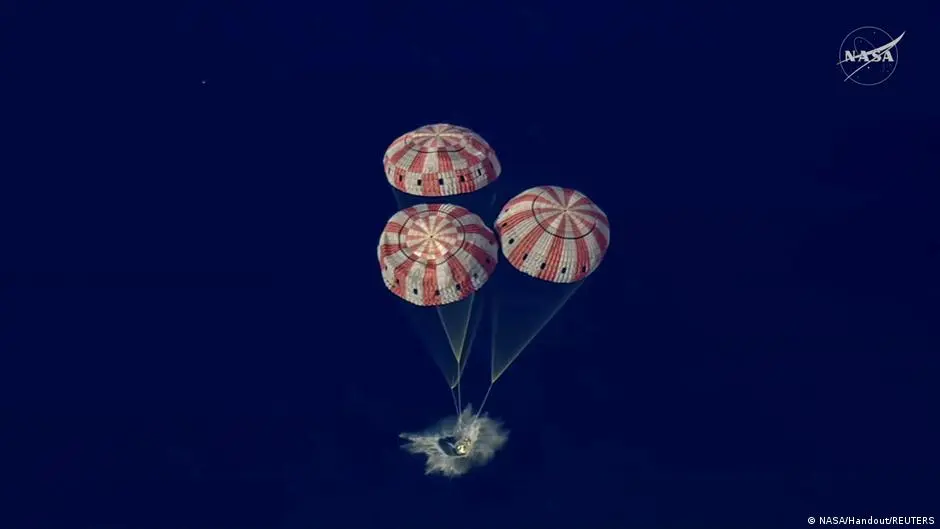
아르테미스 II 태평양에 착수, 역사적인 달 여행 후 귀환
Artemis II splashes down in Pacific after historic moon trip
Deutsche Welle
Wesley Dockery Journalist and editor focused on global security, politics, business and music.
DE
2026-04-11 09:11
Translated
4명의 승무원이 캘리포니아 해안 앞 태평양에 착수한 후 지구로 돌아왔습니다. DW의 보도를 따라가세요.
아르테미스 II 임무가 지구로 귀환함에 따라 최신 소식을 보도하기 위해 저희 블로그를 팔로우하세요:
아르테미스 II 승무원이 지구로 귀환함에 따라 DW의 생중계 보도를 팔로우하려면 아래를 클릭하세요.
아르테미스 II의 4명 승무원이 10일간의 달 항해를 마친 후 캘리포니아 해안 앞 태평양에 착수했습니다. 이는 50년 이상 만의 달 항해입니다.
NASA의 임무는 승무원들이 다른 어떤 인간보다 우주를 더 깊이 탐험하는 기록을 세웠습니다.
미국 우주비행사 리드 와이즈먼, 빅터 글로버, 크리스티나 코흐와 캐나다 우주비행사 제러미 핸센이 '인테그리티'라고 명명된 오리온 우주선을 타고 지구로 귀환했습니다.
"우리가 명확히 들립니다"라고 임무 사령관 와이즈먼이 통신 확인 후 말했습니다.
"정말 대단한 여행이었습니다"라고 덧붙였습니다. "우리는 안정적입니다."
예정된 착수 전에 예상되었던 6분간의 통신 두절 후 아르테미스 II 오리온 우주선과의 통신이 복구되었습니다.
"휴스턴. 인테그리티. 우리가 명확히 들립니다"라고 통신 두절 후 음성 확인 후 임무 사령관 리드 와이즈먼이 말했습니다.
예정된 착수 전에 예상대로 아르테미스 II 오리온 우주선과의 통신이 두절되었습니다. 지구 대기권으로 진입하면서입니다.
두절은 6분간 지속될 것으로 예상됩니다.
4명의 아르테미스 II 우주비행사를 태우고 돌아오는 오리온 캡슐이 지구 대기권에 재진입하기 전에 계획대로 추진 시스템을 분리했습니다.
아르테미스 승무원이 2시간 이내에 남부 캘리포니아 앞 태평양에 착수할 준비를 하면서 NASA는 기록적인 임무 중 승무원들이 촬영한 숨막히는 사진들을 공유했습니다.
NASA는 또한 오리온 우주선이 우리 행성에 점점 더 가까워지는 영상도 공유했습니다.
인간 임무를 달과 화성으로 보내려는 NASA의 새로운 추진은 싸지도 않고 마음이 약한 사람을 위한 것도 아닙니다. 그러나 누가 비용을 부담하고 지구상의 모든 사람이 이 모든 것으로부터 무엇을 얻을까요?
인간이 달에 처음 발을 딛은 지 거의 60년이 지났습니다. 우주 기관과 민간 기업들은 화성으로 가는 관문으로 달을 사용하고 싶어 합니다. 하지만 그것만이 아닙니다.
아르테미스 II의 우주비행사들은 역사상 누구보다 우주로 더 멀리 여행했습니다. 6시간의 근접 비행 동안 승무원들은 달의 뒷면의 이전에 본 적 없는 이미지들을 캡처했습니다.
주요 순간들을 다시 경험해보세요.
이 영상을 보려면 JavaScript를 활성화하고 HTML5 영상을 지원하는 웹 브라우저로 업그레이드하는 것을 고려하세요.
지구 대기권으로의 재진입은 오리온 우주선의 heat shield에 대한 중요한 시험이 될 것입니다.
직경 16.5피트(약 5미터)의 오리온 우주선의 heat shield는 화씨 5,000도(섭씨 2,760도)까지의 온도를 견디도록 제조되었습니다.
heat shield는 우주선 내부의 4명의 승무원을 지구로의 뜨거운 재진입으로부터 보호합니다.
heat shield는 규산염 섬유로 구성된 ablative 물질 Avcoat으로 만들어져 있습니다. Avcoat는 우주선이 지구로 돌아오면서 조절된 방식으로 숯이 되고 침식됩니다.
오리온 우주선은 시속 약 25,000마일(시속 40,234킬로미터)로 대기권에 진입할 것입니다. 우주선은 지구에 착수하면서 시속 19마일(시속 30킬로미터)로 감속할 것입니다.
NASA는 오리온이 지구 대기권에 진입할 때 heat shield가 견딜 것이라고 확신하고 있습니다.
그러나 2022년 12월 아르테미스 I 임무 중 오리온 캡슐은 NASA가 기대했던 방식으로 녹지 않았습니다. heat shield는 NASA의 예상과 일치하지 않는 과도한 숯화를 보였습니다.
아르테미스 II 달 근접 비행은 인간 우주 비행의 재탄생을 의미했으며, 승무원들은 우주에서 훌륭한 사진들을 보내왔습니다.
NASA의 아르테미스 2는 1972년 이후 달에 대한 첫 번째 유인 임무였습니다. 하지만 실제로 얼마나 비용이 들까요, 누가 비용을 지불하고 있을까요?
우리의 편리한 설명에서 알아보세요!
지구로의 성공적인 귀환은 인간을 달로 다시 보낼 수 있는 아르테미스 III 임무의 길을 열 것입니다. 깨끗한 귀환이 없으면 NASA는 유인 착륙으로 진행하지 않을 것입니다.
승무원의 귀환은 NASA가 달 너머에서 우주비행사를 안전하게 돌려보낼 수 있다는 것을 확인할 것입니다.
이는 56년 전 아폴로 13 임무 이후 가장 빠르고 가장 뜨거운 유인 재진입이 될 것입니다.
아르테미스 II 임무는 남부 캘리포니아 샌디에이고 해안 앞 태평양으로의 물 착륙으로 끝날 예정입니다. 착수는 4월 10일 미국 동부 시간 오후 8시 직후(GMT 0100)로 계획되어 있습니다.
물 착륙으로 NASA는 검사를 위해 캡슐을 온전히 회수할 수 있습니다.
회수 작업에는 우주선을 고정하기 위한 미 해군 함정과 다이버들이 포함될 것입니다. 우주비행사들은 도움을 받아 해군 함정으로 비행하고 의료 검사 후 NASA의 휴스턴 존슨 우주 센터로 돌아올 것입니다.
아르테미스 II 승무원이 수행한 달 근접 비행은 인간이 우주로 여행한 가장 먼 거리 기록을 깨뜨린 후 많은 관심을 받았습니다.
하지만 그것은 임무의 끝이 아닙니다. 지구로의 귀환이 가장 위험하고 중요한 단계입니다. 모든 것이 완벽하게 작동해야 합니다 — 그리고 그들은 올바르게 수행할 단 한 번의 시도만 가지고 있습니다.
우리는 승무원들이 안전하게 지구로 귀환하려고 노력하면서 그들을 따라갈 것입니다.
아르테미스 II 승무원이 지구로 귀환함에 따라 DW의 생중계 보도를 팔로우하려면 아래를 클릭하세요.
아르테미스 II의 4명 승무원이 10일간의 달 항해를 마친 후 캘리포니아 해안 앞 태평양에 착수했습니다. 이는 50년 이상 만의 달 항해입니다.
NASA의 임무는 승무원들이 다른 어떤 인간보다 우주를 더 깊이 탐험하는 기록을 세웠습니다.
미국 우주비행사 리드 와이즈먼, 빅터 글로버, 크리스티나 코흐와 캐나다 우주비행사 제러미 핸센이 '인테그리티'라고 명명된 오리온 우주선을 타고 지구로 귀환했습니다.
"우리가 명확히 들립니다"라고 임무 사령관 와이즈먼이 통신 확인 후 말했습니다.
"정말 대단한 여행이었습니다"라고 덧붙였습니다. "우리는 안정적입니다."
예정된 착수 전에 예상되었던 6분간의 통신 두절 후 아르테미스 II 오리온 우주선과의 통신이 복구되었습니다.
"휴스턴. 인테그리티. 우리가 명확히 들립니다"라고 통신 두절 후 음성 확인 후 임무 사령관 리드 와이즈먼이 말했습니다.
예정된 착수 전에 예상대로 아르테미스 II 오리온 우주선과의 통신이 두절되었습니다. 지구 대기권으로 진입하면서입니다.
두절은 6분간 지속될 것으로 예상됩니다.
4명의 아르테미스 II 우주비행사를 태우고 돌아오는 오리온 캡슐이 지구 대기권에 재진입하기 전에 계획대로 추진 시스템을 분리했습니다.
아르테미스 승무원이 2시간 이내에 남부 캘리포니아 앞 태평양에 착수할 준비를 하면서 NASA는 기록적인 임무 중 승무원들이 촬영한 숨막히는 사진들을 공유했습니다.
NASA는 또한 오리온 우주선이 우리 행성에 점점 더 가까워지는 영상도 공유했습니다.
인간 임무를 달과 화성으로 보내려는 NASA의 새로운 추진은 싸지도 않고 마음이 약한 사람을 위한 것도 아닙니다. 그러나 누가 비용을 부담하고 지구상의 모든 사람이 이 모든 것으로부터 무엇을 얻을까요?
인간이 달에 처음 발을 딛은 지 거의 60년이 지났습니다. 우주 기관과 민간 기업들은 화성으로 가는 관문으로 달을 사용하고 싶어 합니다. 하지만 그것만이 아닙니다.
아르테미스 II의 우주비행사들은 역사상 누구보다 우주로 더 멀리 여행했습니다. 6시간의 근접 비행 동안 승무원들은 달의 뒷면의 이전에 본 적 없는 이미지들을 캡처했습니다.
주요 순간들을 다시 경험해보세요.
이 영상을 보려면 JavaScript를 활성화하고 HTML5 영상을 지원하는 웹 브라우저로 업그레이드하는 것을 고려하세요.
지구 대기권으로의 재진입은 오리온 우주선의 heat shield에 대한 중요한 시험이 될 것입니다.
직경 16.5피트(약 5미터)의 오리온 우주선의 heat shield는 화씨 5,000도(섭씨 2,760도)까지의 온도를 견디도록 제조되었습니다.
heat shield는 우주선 내부의 4명의 승무원을 지구로의 뜨거운 재진입으로부터 보호합니다.
heat shield는 규산염 섬유로 구성된 ablative 물질 Avcoat으로 만들어져 있습니다. Avcoat는 우주선이 지구로 돌아오면서 조절된 방식으로 숯이 되고 침식됩니다.
오리온 우주선은 시속 약 25,000마일(시속 40,234킬로미터)로 대기권에 진입할 것입니다. 우주선은 지구에 착수하면서 시속 19마일(시속 30킬로미터)로 감속할 것입니다.
NASA는 오리온이 지구 대기권에 진입할 때 heat shield가 견딜 것이라고 확신하고 있습니다.
그러나 2022년 12월 아르테미스 I 임무 중 오리온 캡슐은 NASA가 기대했던 방식으로 녹지 않았습니다. heat shield는 NASA의 예상과 일치하지 않는 과도한 숯화를 보였습니다.
아르테미스 II 달 근접 비행은 인간 우주 비행의 재탄생을 의미했으며, 승무원들은 우주에서 훌륭한 사진들을 보내왔습니다.
NASA의 아르테미스 2는 1972년 이후 달에 대한 첫 번째 유인 임무였습니다. 하지만 실제로 얼마나 비용이 들까요, 누가 비용을 지불하고 있을까요?
우리의 편리한 설명에서 알아보세요!
지구로의 성공적인 귀환은 인간을 달로 다시 보낼 수 있는 아르테미스 III 임무의 길을 열 것입니다. 깨끗한 귀환이 없으면 NASA는 유인 착륙으로 진행하지 않을 것입니다.
승무원의 귀환은 NASA가 달 너머에서 우주비행사를 안전하게 돌려보낼 수 있다는 것을 확인할 것입니다.
이는 56년 전 아폴로 13 임무 이후 가장 빠르고 가장 뜨거운 유인 재진입이 될 것입니다.
아르테미스 II 임무는 남부 캘리포니아 샌디에이고 해안 앞 태평양으로의 물 착륙으로 끝날 예정입니다. 착수는 4월 10일 미국 동부 시간 오후 8시 직후(GMT 0100)로 계획되어 있습니다.
물 착륙으로 NASA는 검사를 위해 캡슐을 온전히 회수할 수 있습니다.
회수 작업에는 우주선을 고정하기 위한 미 해군 함정과 다이버들이 포함될 것입니다. 우주비행사들은 도움을 받아 해군 함정으로 비행하고 의료 검사 후 NASA의 휴스턴 존슨 우주 센터로 돌아올 것입니다.
아르테미스 II 승무원이 수행한 달 근접 비행은 인간이 우주로 여행한 가장 먼 거리 기록을 깨뜨린 후 많은 관심을 받았습니다.
하지만 그것은 임무의 끝이 아닙니다. 지구로의 귀환이 가장 위험하고 중요한 단계입니다. 모든 것이 완벽하게 작동해야 합니다 — 그리고 그들은 올바르게 수행할 단 한 번의 시도만 가지고 있습니다.
우리는 승무원들이 안전하게 지구로 귀환하려고 노력하면서 그들을 따라갈 것입니다.
The four crew members are back on Earth after splashing down in the Pacific Ocean off the California coast. Follow DW.
Follow our blog for the latest as the Artemis II mission returns to Earth:Click below to follow DW's live coverage as the Artemis II crew returns to Earth
The four-member crew of the Artemis II splashed down in the Pacific Ocean off the coast of California, after a 10-day moon voyage, the first in over half a century.
NASA's mission saw the crew break the record for venturing deeper into space than any other humans.
US astronauts Reid Wiseman, Victor Glover and Christina Koch and Canadian astronaut Jeremy Hansen returned to Earth aboard their Orion spacecraft, dubbed Integrity.
"We have you loud and clear," mission commander Wiseman said following a communications check.
"What a journey," he added. "We are stable."
Communication has just been restored with the Artemis II Orion spacecraft, after a six-minute blackout that was expected ahead of the scheduled splashdown.
"Houston. Integrity. We have you loud and clear," said mission commander Reid Wiseman following a voice check after the communications loss.
Communication has been lost with the Artemis II Orion spacecraft, as expected ahead of the scheduled splashdown, as it enters the Earth's atmosphere.
The blackout is due to last six minutes.
The Orion capsule bringing back four Artemis II astronauts has shed its propulsion system as planned ahead of reentering the Earth's atmosphere.
As the Artemis crew prepares for their splashdown in the Pacific Ocean off southern California in less than two hours, NASA shared some breathtaking photos taken by the crew during their record-setting mission.
NASA also shared a video as the Orion spacecraft inches closer to our planet.
NASA's renewed push to get a human mission to the moon and Mars is neither cheap nor for the faint of heart. But who ends up covering the costs and what does everyone still on Earth get out of all this?
Almost six decades since humans first walked on the moon, space agencies and commercial companies want to use it as a gateway to Mars. But that's not all.
The astronauts aboard the Artemis II traveled further into space than anyone in history. During a six-hour flyby the crew captured images never seen before of the far side of the moon.
Relive some of the key moments here.
To view this video please enable JavaScript, and consider upgrading to a web browser that supports HTML5 video
Reentry into Earth's atmosphere will be a critical test for the heat shield of the Orion spacecraft.
The 16.5-foot-wide (around five meters wide) heat shield of the Orion spacecraft is manufactured to withstand temperatures of up to 5,000 degrees Fahrenheit (2,760 Celsius).
The heat shield protects the four crew members inside the spacecraft from the scorching reentry into Earth.
The heat shield is made out of the ablative material Avcoat which consists of silica fibers. Avcoat chars and erodes in a controlled fashion as the spacecraft heads back to Earth.
The Orion spacecraft will enter the atmosphere at some 25,000 miles per hour (40,234 kilometers per hour). The spacecraft will then decelerate to 19 miles per hour (30 kilometers per hour) as it splashes down onto Earth.
NASA is confident that the heat shield will survive when the Orion enters the Earth's atmosphere.
However, during the Artemis I mission in December 2022, the Orion capsule didn't melt in the way that NASA had hoped. The heat shield witnessed excess charring which was not in line with NASA's expectations.
The Artemis II lunar flyby marked a rebirth for human spaceflight, and the crew sent back some phenomenal photos from space.
NASA’s Artemis 2 was the first crewed mission to the moon since 1972. But how much does it actually cost, and who is paying for it?
Find out in our handy explainer!
The successful return to Earth would clear the way for the Artemis III mission, which could see humans back on the Moon. Without a clean return, NASA will not move forward with crewed landings.
The crew's return would confirm that NASA can bring astronauts safely back from beyond the Moon.
It would be the fastest and hottest crewed reentry since the Apollo 13 mission 56 years ago.
The Artemis II mission is set to end with a water landing in the Pacific Ocean, off the coast of San Diego in southern California. Splashdown is planned for April 10, shortly after 8 p.m. US Eastern Time (0100 GMT).
Water landings allow NASA to recover the capsule intact for inspection.
The recovery effort will involve US Navy ships and divers to secure the spacecraft. The astronauts will be helped out and then flown to a Navy ship, and following medical checks, will return to NASA’s Johnson Space Center in Houston.
The lunar flyby conducted by the crew of Artemis II garnered a lot of attention after breaking the record for the farthest any humans had traveled into space.
But that was by no means the end of the mission. The return to earth is the riskiest and most critical phase. Everything needs to work perfectly — and they only have one attempt to get it right.
We'll be following the crew as they endeavor to return to Earth safely.