아르테미스 II 우주선 귀환: 달 미션 후 우주비행사들 지구로 복귀
Artemis II splashdown: Astronauts return to Earth after lunar mission
Al Jazeera
Elizabeth Melimopoulos
AR
2026-04-11 09:08
Translated
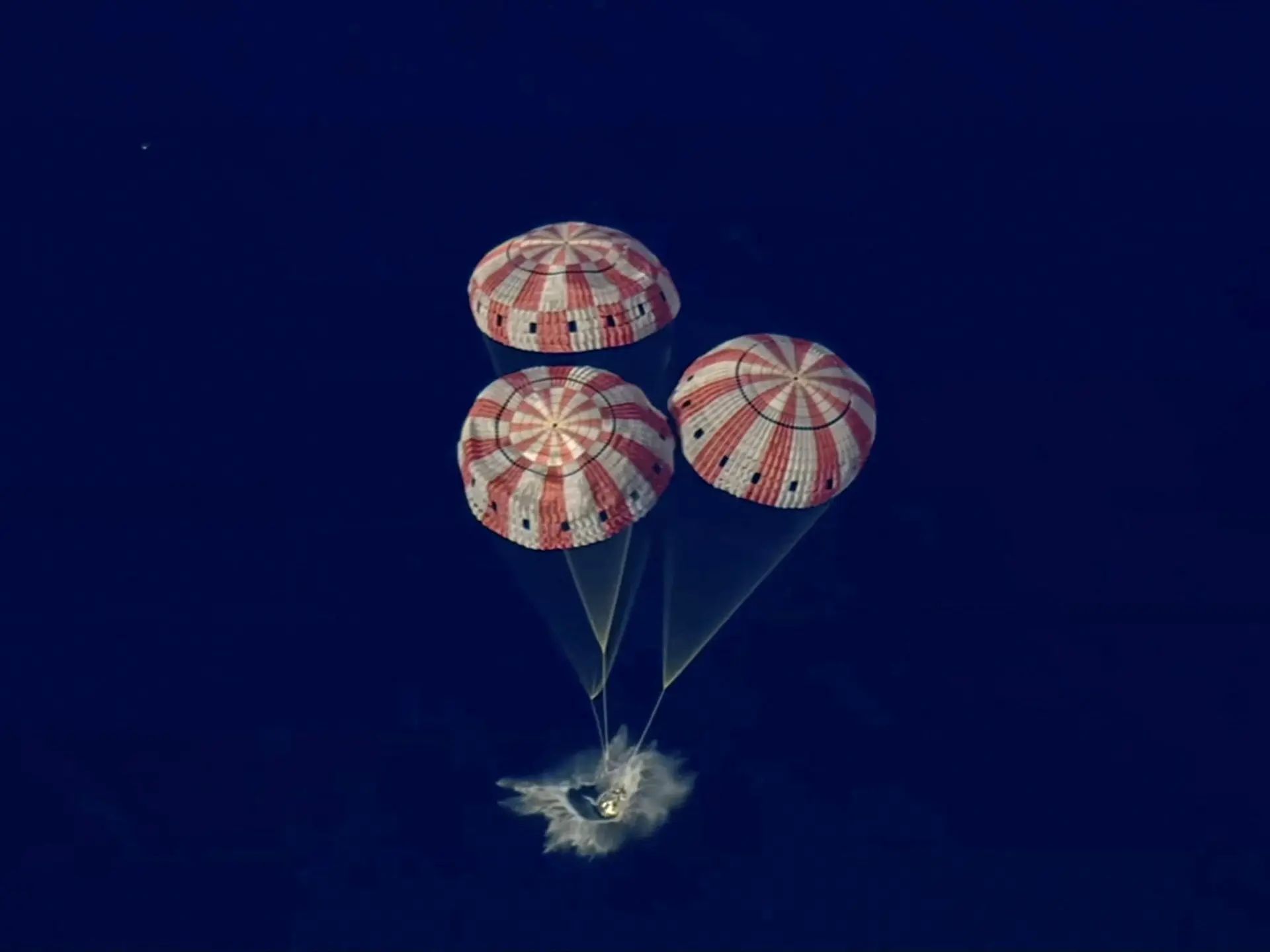
아르테미스 II 승무원이 열 차폐막을 시험한 고속 재진입 후 낙하산으로 태평양에 착륙했습니다.
NASA의 아르테미스 II 우주비행사들이 지구로 안전하게 귀환했으며, 50년 이상 만에 처음으로 인간을 달 주위를 거쳐 왕복시킨 획기적인 미션을 완료했습니다.
승무원들은 지구 대기권을 통한 고속 재진입 후 금요일 태평양에서 낙하산 착륙을 성공적으로 완료했습니다. 회수팀은 태평양 표준시 오후 5시 7분(GMT 00시 7분)에 도착한 후 그들을 회수하기 위해 캘리포니아 해안 근처에서 대기 중이었습니다.
4명의 우주비행사들은 이제 의료 검진을 받은 후 NASA의 휴스턴 존슨 우주센터로 돌아갈 것입니다.
NASA 승무원 리드 와이즈만, 빅터 글로버, 크리스티나 코흐와 캐나다 우주비행사 제러미 핸슨은 지난주 플로리다의 케네디 우주센터에서 출발하여 10일 간의 항해를 시작했으며, 지금까지 인류가 도달한 것보다 더 먼 우주로 여행했습니다.
그들은 달의 뒷면을 한 바퀴 돌며 우주에서 장비를 시험한 후 금요일 지구로 돌아왔습니다.
이들의 미션은 1972년 아폴로 17 미션 이후 달에 대한 첫 번째 미션이며, 이들의 귀환은 기술적 이정표로 가득 찬 미션을 마무리합니다.
아르테미스 II는 향후 달 미션, 특히 아폴로 시대 이후 처음으로 우주비행사들을 달 표면에 착륙시키는 것을 목표로 하는 아르테미스 IV를 위한 중요한 시험 비행으로 널리 간주됩니다.
엔지니어들은 이제 오리온 캡슐의 열 차폐막 성능뿐만 아니라 항법 시스템 및 생명 유지 기술을 포함한 미션의 핵심 데이터를 분석할 것입니다. 이 모든 것들은 인간을 우주 깊숙이 안전하게 운반하는 데 필수적입니다.
귀환에는 또한 여정의 가장 도전적인 단계 중 하나가 포함되었습니다. 우주선 주변에서 형성되는 극심한 열로 인해 발생한 짧은 통신 두절 기간입니다.
하지만 기록적인 거리를 기반으로, 이 미션은 다른 역사적 첫 번째 사례들도 표시했습니다. 글로버는 달 주위를 여행한 첫 번째 유색인종이 되었고, 코흐는 첫 번째 여성이 되었으며, 핸슨은 첫 번째 미국 이외의 국민이 되었습니다.
여행 중 승무원들은 달 표면의 특징을 생생하게 보고했으며 나중에 일식과 운석 충돌을 목격했습니다.
미션 사령관 와이즈만은 "우리가 영혼으로 정말 바랐던 것은 잠시나마 세상이 멈추고 이것이 우리 우주에서 매우 특별한 장소에 있는 아름다운 행성이라는 것을 기억했으면 하는 것"이라고 언급했습니다.
"우리 모두가 우리에게 주어진 것을 소중히 여겨야 합니다."
우주비행사들의 출발 이후 매일 아침 NASA는 하루를 시작하기 위해 아르테미스 II에 노래를 보냈습니다. 금요일에 우주비행사들은 라이브의 노래 "Run to the Water"와 잭 브라운 밴드의 컨트리 곡 "Free"의 멜로디로 깨어났습니다.
승무원들은 지구 대기권을 통한 고속 재진입 후 금요일 태평양에서 낙하산 착륙을 성공적으로 완료했습니다. 회수팀은 태평양 표준시 오후 5시 7분(GMT 00시 7분)에 도착한 후 그들을 회수하기 위해 캘리포니아 해안 근처에서 대기 중이었습니다.
4명의 우주비행사들은 이제 의료 검진을 받은 후 NASA의 휴스턴 존슨 우주센터로 돌아갈 것입니다.
NASA 승무원 리드 와이즈만, 빅터 글로버, 크리스티나 코흐와 캐나다 우주비행사 제러미 핸슨은 지난주 플로리다의 케네디 우주센터에서 출발하여 10일 간의 항해를 시작했으며, 지금까지 인류가 도달한 것보다 더 먼 우주로 여행했습니다.
그들은 달의 뒷면을 한 바퀴 돌며 우주에서 장비를 시험한 후 금요일 지구로 돌아왔습니다.
이들의 미션은 1972년 아폴로 17 미션 이후 달에 대한 첫 번째 미션이며, 이들의 귀환은 기술적 이정표로 가득 찬 미션을 마무리합니다.
아르테미스 II는 향후 달 미션, 특히 아폴로 시대 이후 처음으로 우주비행사들을 달 표면에 착륙시키는 것을 목표로 하는 아르테미스 IV를 위한 중요한 시험 비행으로 널리 간주됩니다.
엔지니어들은 이제 오리온 캡슐의 열 차폐막 성능뿐만 아니라 항법 시스템 및 생명 유지 기술을 포함한 미션의 핵심 데이터를 분석할 것입니다. 이 모든 것들은 인간을 우주 깊숙이 안전하게 운반하는 데 필수적입니다.
귀환에는 또한 여정의 가장 도전적인 단계 중 하나가 포함되었습니다. 우주선 주변에서 형성되는 극심한 열로 인해 발생한 짧은 통신 두절 기간입니다.
하지만 기록적인 거리를 기반으로, 이 미션은 다른 역사적 첫 번째 사례들도 표시했습니다. 글로버는 달 주위를 여행한 첫 번째 유색인종이 되었고, 코흐는 첫 번째 여성이 되었으며, 핸슨은 첫 번째 미국 이외의 국민이 되었습니다.
여행 중 승무원들은 달 표면의 특징을 생생하게 보고했으며 나중에 일식과 운석 충돌을 목격했습니다.
미션 사령관 와이즈만은 "우리가 영혼으로 정말 바랐던 것은 잠시나마 세상이 멈추고 이것이 우리 우주에서 매우 특별한 장소에 있는 아름다운 행성이라는 것을 기억했으면 하는 것"이라고 언급했습니다.
"우리 모두가 우리에게 주어진 것을 소중히 여겨야 합니다."
우주비행사들의 출발 이후 매일 아침 NASA는 하루를 시작하기 위해 아르테미스 II에 노래를 보냈습니다. 금요일에 우주비행사들은 라이브의 노래 "Run to the Water"와 잭 브라운 밴드의 컨트리 곡 "Free"의 멜로디로 깨어났습니다.
Artemis II crew landed in the Pacific Ocean under parachutes after a high-speed re-entry that tested its heat shield.
NASA’s Artemis II astronauts have safely splashed down on Earth, completing a landmark mission that carried humans around the Moon and back for the first time in more than 50 years.The crew successfully completed a parachute landing on Friday in the Pacific Ocean, after a high-speed re-entry through Earth’s atmosphere. Recovery teams were off the coast of California, waiting to retrieve them after their arrival at 5:07pm Pacific time (00:07 GMT).
The four astronauts will now undergo medical checks before returning to NASA’s Johnson Space Center in Houston.
NASA crew members Reid Wiseman, Victor Glover and Christina Koch, together with Canadian astronaut Jeremy Hansen, began a 10-day voyage from Florida’s Kennedy Space Center last week, travelling farther into space than any human ever has.
They looped around the far side of the moon, testing equipment in deep space, before propelling back to Earth on Friday.
Their mission was the first to the moon since the 1972 Apollo 17 mission, and their return caps a mission packed with technical milestones.
Artemis II is widely seen as a critical test flight for future Moon missions, particularly Artemis IV, which aims to land astronauts on the lunar surface for the first time since the Apollo era.
Engineers will now analyse key data from the mission, including the performance of the Orion capsule’s heat shield as well as navigation systems and life-support technology, all essential for safely carrying humans deeper into space.
The return also included one of the most challenging phases of the journey: a brief communication blackout during re-entry, caused by intense heat building up around the spacecraft.
But on top of its record-setting distance, the mission also marked other historic firsts. Glover became the first person of colour to travel around the moon, Koch the first woman, and Hansen the first non-American.
During their journey, the crew reported in vivid detail features of the lunar surface and later witnessed a solar eclipse as well as meteorite impacts.
Mission commander Wiseman reflected that “what we really hoped in our soul is that we could, for just a moment, have the world pause — and remember that this is a beautiful planet in a very special place in our universe”.
“We should all cherish what we have been gifted.”
Every morning since the astronauts’ departure, NASA has sent a song to Artemis II to start the day. On Friday, the astronauts awoke to the tune of Live’s song Run to the Water and the country hit Free, by Zac Brown Band.