아르테미스 II 우주비행사들 지구로 귀환, 역사적 달 임무 완료
Artemis II astronauts return to Earth, capping historic Moon mission
Channel NewsAsia
EN
2026-04-11 09:53
Translated
오리온 캡슐은 지구로 돌아오는 과정에서 음속의 30배 이상의 최고 속도에 도달했으며, 태양 표면 온도의 약 절반 정도로 뜨거운 온도에 직면했다.
캘리포니아 샌디에이고: NASA 우주선이 4명의 우주비행사를 태우고 금요일(4월 10일) 계획대로 캘리포니아 해안 인근에 착수했으며, 미국 우주국의 성공적인 달 주변 유인 시험 임무를 완료했다. 이는 50년 이상 만에 처음 있는 달 근접 비행이다. 임무 지휘관 리드 위즈먼은 자신, 크리스티나 코흐, 빅터 글로버, 제러미 핸슨과 함께한 승무원들이 "안정적"이고 "좋은" 상태라고 보고했다. "그들은 좋은 상태에 있습니다. 그것이 무엇을 의미하는 것입니다"라고 NASA 공보 담당자 롭 나비아스가 기관의 라이브스트림에서 그들의 귀환을 해설하며 말했다. 고위험 재진입 중 잠깐이지만 긴장된 통신 두절 이후, 위즈먼 지휘관의 목소리는 우주비행사들이 집으로 돌아오는 길에 잘 진행되고 있다는 안도감을 불러일으켰다. "휴스턴. 무결성. 우리가 당신을 명확히 들을 수 있습니다"라고 임무 통제소의 음성 확인 이후 그가 말했다. NASA와 미국 군은 이제 그들이 떠있는 캡슐에서 나올 수 있도록 도울 것이며, 그 후 그들은 샌디에이고 인근 태평양 해상의 회수선으로 실려갈 것이다. 우주비행사들이 지구로 돌아올 때 그들의 우주선은 음속의 30배 이상의 최고 속도에 도달했으며, 태양 표면의 약 절반 정도로 뜨거운 온도에 직면했다. 이는 이전 시험 임무에서 문제를 겪었던 열 방패의 주요 시험이었다. 그러나 아르테미스 II 재진입은 완벽하게 진행되었다. "이것은 완벽한 진입이자 완벽한 착수였습니다"라고 나비아스가 말했다.
4월 1일 플로리다에서의 극적인 발사로 시작된 약 10일간의 임무는 첫 사례, 기록, 그리고 특별한 순간들로 가득 찼다. 이것은 결국 유인 달 착륙을 향한 중요한 디딤돌로 여겨졌다. 이것은 달에 지속적인 존재를 설치하고 궁극적으로 기지 건설을 목표로 하는 NASA의 프로그램의 첫 유인 임무였다. 아르테미스 프로그램의 두 번째 단계는 현재까지 인간을 운반하지 않았던 오리온 캡슐의 신뢰성을 검증하는 시험 임무였다. 이 항해는 또한 기록을 세웠다: 4명의 우주비행사는 지구로부터 40만 6,771킬로미터(252,756마일) 떨어진 곳으로 여행한 인류 최초가 되었다. 우주 공간을 질주하고 달을 빙 돌면서 우주비행사들은 수천 장의 사진을 찍었고, 지구의 사람들을 매료시킨 놀라운 이미지 포트폴리오를 모았다. 그들은 또한 태양 일식을 목격했으며 달 표면의 놀라운 운석 충돌을 목격했으며, 이는 NASA 과학자들을 경탄하게 했다. 여러 성과가 항해의 역사적 특성을 더했다: 글로버는 달을 비행한 첫 번째 유색인종이었고, 코흐는 첫 번째 여성이었으며, 캐나다인 핸슨은 첫 번째 미국인이 아닌 사람이었다.
오리온 캡슐은 주요 시험을 통과했다: 2022년의 무인 달 왕복 시험 비행인 아르테미스 I 동안 중요한 열 방패가 예상치 못한 방식으로 부식되었던 우려가 제기되었으므로 재진입 위험이 특히 높았다. 이번에 위험을 최소화하기 위해 NASA는 시험 임무에서 사용했던 재진입 경로를 변경했으며, 이것이 합병증의 역할을 했다고 결정했다. 우주비행사들은 더 가파르고 따라서 더 짧은 궤도로 돌아왔으며, NASA 관계자들은 우주비행사들과의 논의를 통해 이것이 위험을 허용 가능한 수준으로 감소시킬 것이라고 결론지었다. 그럼에도 불구하고 열 방패 상황은 1986년과 2003년의 챌린저 및 컬럼비아 우주왕복선 재해에 대한 불안한 비교를 촉발했으며, 이때 우주비행사들은 경고 신호가 무시된 후 사망했다. 그러나 NASA, 우주비행사 및 그들의 가족, 그리고 일반 대중의 안도에, 아르테미스 II는 성공적인 귀환을 완료했다. 사랑하는 사람들은 휴스턴의 임무 통제소에서 귀환 여정을 지켜보고 있었으며, 우주비행사들은 아마도 이번 주말에 가족과 재결합할 예정이다.
캘리포니아 샌디에이고: NASA 우주선이 4명의 우주비행사를 태우고 금요일(4월 10일) 계획대로 캘리포니아 해안 인근에 착수했으며, 미국 우주국의 성공적인 달 주변 유인 시험 임무를 완료했다. 이는 50년 이상 만에 처음 있는 달 근접 비행이다. 임무 지휘관 리드 위즈먼은 자신, 크리스티나 코흐, 빅터 글로버, 제러미 핸슨과 함께한 승무원들이 "안정적"이고 "좋은" 상태라고 보고했다. "그들은 좋은 상태에 있습니다. 그것이 무엇을 의미하는 것입니다"라고 NASA 공보 담당자 롭 나비아스가 기관의 라이브스트림에서 그들의 귀환을 해설하며 말했다. 고위험 재진입 중 잠깐이지만 긴장된 통신 두절 이후, 위즈먼 지휘관의 목소리는 우주비행사들이 집으로 돌아오는 길에 잘 진행되고 있다는 안도감을 불러일으켰다. "휴스턴. 무결성. 우리가 당신을 명확히 들을 수 있습니다"라고 임무 통제소의 음성 확인 이후 그가 말했다. NASA와 미국 군은 이제 그들이 떠있는 캡슐에서 나올 수 있도록 도울 것이며, 그 후 그들은 샌디에이고 인근 태평양 해상의 회수선으로 실려갈 것이다. 우주비행사들이 지구로 돌아올 때 그들의 우주선은 음속의 30배 이상의 최고 속도에 도달했으며, 태양 표면의 약 절반 정도로 뜨거운 온도에 직면했다. 이는 이전 시험 임무에서 문제를 겪었던 열 방패의 주요 시험이었다. 그러나 아르테미스 II 재진입은 완벽하게 진행되었다. "이것은 완벽한 진입이자 완벽한 착수였습니다"라고 나비아스가 말했다.
4월 1일 플로리다에서의 극적인 발사로 시작된 약 10일간의 임무는 첫 사례, 기록, 그리고 특별한 순간들로 가득 찼다. 이것은 결국 유인 달 착륙을 향한 중요한 디딤돌로 여겨졌다. 이것은 달에 지속적인 존재를 설치하고 궁극적으로 기지 건설을 목표로 하는 NASA의 프로그램의 첫 유인 임무였다. 아르테미스 프로그램의 두 번째 단계는 현재까지 인간을 운반하지 않았던 오리온 캡슐의 신뢰성을 검증하는 시험 임무였다. 이 항해는 또한 기록을 세웠다: 4명의 우주비행사는 지구로부터 40만 6,771킬로미터(252,756마일) 떨어진 곳으로 여행한 인류 최초가 되었다. 우주 공간을 질주하고 달을 빙 돌면서 우주비행사들은 수천 장의 사진을 찍었고, 지구의 사람들을 매료시킨 놀라운 이미지 포트폴리오를 모았다. 그들은 또한 태양 일식을 목격했으며 달 표면의 놀라운 운석 충돌을 목격했으며, 이는 NASA 과학자들을 경탄하게 했다. 여러 성과가 항해의 역사적 특성을 더했다: 글로버는 달을 비행한 첫 번째 유색인종이었고, 코흐는 첫 번째 여성이었으며, 캐나다인 핸슨은 첫 번째 미국인이 아닌 사람이었다.
오리온 캡슐은 주요 시험을 통과했다: 2022년의 무인 달 왕복 시험 비행인 아르테미스 I 동안 중요한 열 방패가 예상치 못한 방식으로 부식되었던 우려가 제기되었으므로 재진입 위험이 특히 높았다. 이번에 위험을 최소화하기 위해 NASA는 시험 임무에서 사용했던 재진입 경로를 변경했으며, 이것이 합병증의 역할을 했다고 결정했다. 우주비행사들은 더 가파르고 따라서 더 짧은 궤도로 돌아왔으며, NASA 관계자들은 우주비행사들과의 논의를 통해 이것이 위험을 허용 가능한 수준으로 감소시킬 것이라고 결론지었다. 그럼에도 불구하고 열 방패 상황은 1986년과 2003년의 챌린저 및 컬럼비아 우주왕복선 재해에 대한 불안한 비교를 촉발했으며, 이때 우주비행사들은 경고 신호가 무시된 후 사망했다. 그러나 NASA, 우주비행사 및 그들의 가족, 그리고 일반 대중의 안도에, 아르테미스 II는 성공적인 귀환을 완료했다. 사랑하는 사람들은 휴스턴의 임무 통제소에서 귀환 여정을 지켜보고 있었으며, 우주비행사들은 아마도 이번 주말에 가족과 재결합할 예정이다.
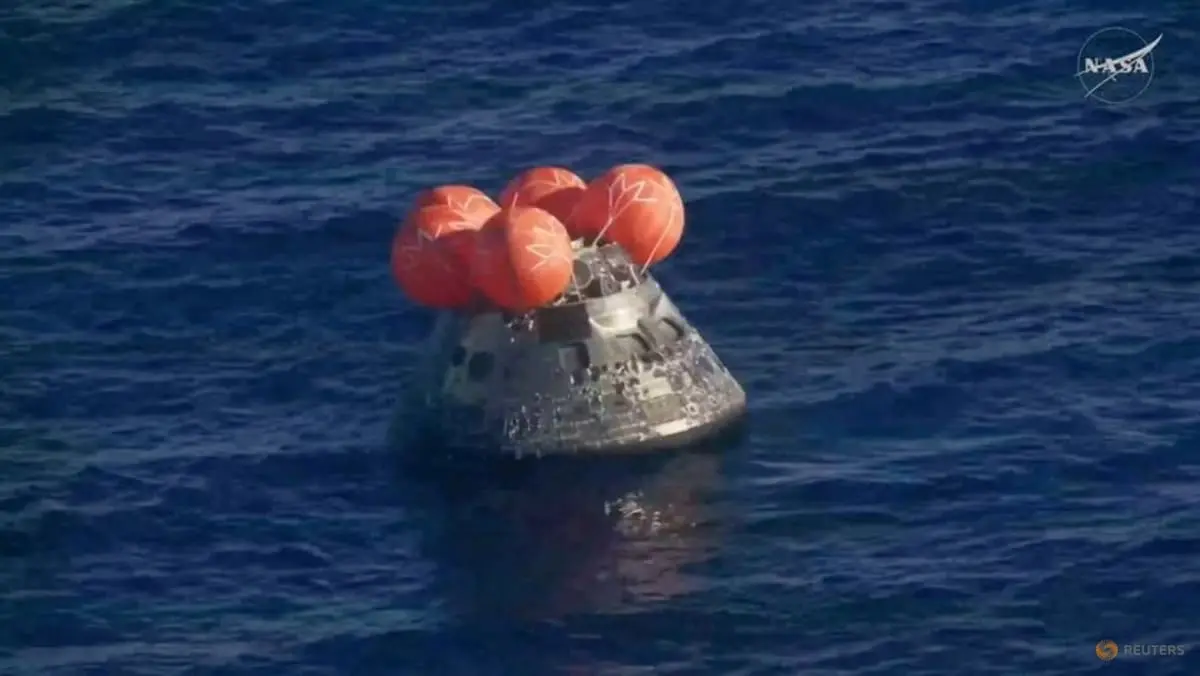
The Orion capsule, on its return to Earth, reached maximum speeds of more than 30 times the speed of sound and faced searing temperatures around half as hot as the surface of the Sun.
SAN DIEGO, California: The NASA spacecraft carrying four astronauts splashed down as planned Friday (Apr 10) off the California coast, capping the US space agency's successful crewed test mission around the Moon, the first such flyby in more than 50 years.Mission commander Reid Wiseman reported that the crewmembers - himself along with Christina Koch, Victor Glover and Jeremy Hansen - were "stable" and "green.""They're in great condition, that's what that means," said Rob Navias, the NASA public affairs official who narrated their return on the agency's livestream.Following a brief but nerve-wracking communications blackout during their high-stakes re-entry, mission commander Wiseman's voice triggered relief that the astronauts were well on their way back home."Houston. Integrity. We have you loud and clear," he said following a voice check from mission control.NASA and the US military will now help them leave the bobbing capsule, after which they will be flown to a recovery ship off the Pacific coast near San Diego.As the astronauts returned to Earth their spacecraft reached maximum speeds more than 30 times the speed of sound, and faced searing temperatures around half as hot as the surface of the Sun. It was a key test of their heat shield, which in an earlier trial mission had faced complications.But the Artemis II re-entry went off without a hitch."This was a textbook entry and a textbook touchdown," said Navias.
The approximately 10-day mission that began with a dramatic launch from Florida on April 1 was studded with firsts, records and extraordinary moments.It was considered a key stepping stone towards eventual crewed lunar landings.It was the first crewed mission of NASA's program aiming to install a sustained presence on the Moon, including the eventual construction of a base.The second phase of the Artemis program was a test mission to verify the reliability of the Orion capsule, which before now had not carried humans.The voyage also broke a record: the four astronauts became the first humans to travel furthest away from the Earth, at 406,771 kilometres (252,756 miles).While hurtling through deep space and zipping around the Moon the astronauts took thousands of photographs, amassing a stunning portfolio of images that captivated people on Earth.They also witnessed a solar eclipse along with extraordinary meteorite strikes on the lunar surface that had left NASA scientists awe-struck.Several achievements added to the voyage's historic nature: Glover was the first person of color to fly around the Moon, Koch was the first woman, and Canadian Hansen the first non-American.
The Orion capsule passed a key test: the re-entry stakes were particularly high given concerns that arose during Artemis I, when an uncrewed 2022 test flight to the Moon and back saw a crucial heat shield erode in unexpected ways.To minimise risks this time around, NASA shifted the re-entry path they had used in the test mission, after determining it had played a role in the complications.The astronauts returned at a steeper and thus shorter trajectory, which NASA officials, in discussion with the astronauts, concluded would reduce risk to an acceptable degree.Still, the heat shield situation prompted uneasy comparisons to the Challenger and Columbia space shuttle disasters of 1986 and 2003 respectively, when astronauts died after warning signs were set aside.But to the relief of NASA, the astronauts and their families, along with the public at large, Artemis II completed a successful return.Loved ones were watching the journey home from mission control in Houston, where the astronauts are due to reunite with their families, likely this weekend.
Get our pick of top stories and thought-provoking articles in your inbox
Stay updated with notifications for breaking news and our best stories
Get WhatsApp alerts
Join our channel for the top reads for the day on your preferred chat app
SAN DIEGO, California: The NASA spacecraft carrying four astronauts splashed down as planned Friday (Apr 10) off the California coast, capping the US space agency's successful crewed test mission around the Moon, the first such flyby in more than 50 years.Mission commander Reid Wiseman reported that the crewmembers - himself along with Christina Koch, Victor Glover and Jeremy Hansen - were "stable" and "green.""They're in great condition, that's what that means," said Rob Navias, the NASA public affairs official who narrated their return on the agency's livestream.Following a brief but nerve-wracking communications blackout during their high-stakes re-entry, mission commander Wiseman's voice triggered relief that the astronauts were well on their way back home."Houston. Integrity. We have you loud and clear," he said following a voice check from mission control.NASA and the US military will now help them leave the bobbing capsule, after which they will be flown to a recovery ship off the Pacific coast near San Diego.As the astronauts returned to Earth their spacecraft reached maximum speeds more than 30 times the speed of sound, and faced searing temperatures around half as hot as the surface of the Sun. It was a key test of their heat shield, which in an earlier trial mission had faced complications.But the Artemis II re-entry went off without a hitch."This was a textbook entry and a textbook touchdown," said Navias.
The approximately 10-day mission that began with a dramatic launch from Florida on April 1 was studded with firsts, records and extraordinary moments.It was considered a key stepping stone towards eventual crewed lunar landings.It was the first crewed mission of NASA's program aiming to install a sustained presence on the Moon, including the eventual construction of a base.The second phase of the Artemis program was a test mission to verify the reliability of the Orion capsule, which before now had not carried humans.The voyage also broke a record: the four astronauts became the first humans to travel furthest away from the Earth, at 406,771 kilometres (252,756 miles).While hurtling through deep space and zipping around the Moon the astronauts took thousands of photographs, amassing a stunning portfolio of images that captivated people on Earth.They also witnessed a solar eclipse along with extraordinary meteorite strikes on the lunar surface that had left NASA scientists awe-struck.Several achievements added to the voyage's historic nature: Glover was the first person of color to fly around the Moon, Koch was the first woman, and Canadian Hansen the first non-American.
The Orion capsule passed a key test: the re-entry stakes were particularly high given concerns that arose during Artemis I, when an uncrewed 2022 test flight to the Moon and back saw a crucial heat shield erode in unexpected ways.To minimise risks this time around, NASA shifted the re-entry path they had used in the test mission, after determining it had played a role in the complications.The astronauts returned at a steeper and thus shorter trajectory, which NASA officials, in discussion with the astronauts, concluded would reduce risk to an acceptable degree.Still, the heat shield situation prompted uneasy comparisons to the Challenger and Columbia space shuttle disasters of 1986 and 2003 respectively, when astronauts died after warning signs were set aside.But to the relief of NASA, the astronauts and their families, along with the public at large, Artemis II completed a successful return.Loved ones were watching the journey home from mission control in Houston, where the astronauts are due to reunite with their families, likely this weekend.
Get our pick of top stories and thought-provoking articles in your inbox
Stay updated with notifications for breaking news and our best stories
Get WhatsApp alerts
Join our channel for the top reads for the day on your preferred chat app