다음 먹거리 열풍의 필수 요소? '소셜미디어 감성' 갖춰야
A Must for the Next Food Craze? Be ‘Social Media Gorgeous.’
The New York Times
Julie Creswell and Kevin Draper
EN
2026-04-09 09:01
Translated
우베의 인기 상승은 자주색 얌의 맛이나 필리핀 기원과는 거의 무관하다. 전문가들은 색상이 핵심이라고 지적한다.
By Julie Creswell and Kevin Draper
Two years ago when Maria Leyesa opened Foodologie in Long Beach, Calif., customers were immediately intrigued by one of her signature bakery items: an ube brownie.
“Ube, ube, ube was a constant question,” Ms. Leyesa said. “Nobody knew what it was.”
The vivid purple yam, pronounced “oo-bay,” has been a Filipino staple for centuries. But the ingredient is not nearly as widely used in the United States, appearing last year on fewer than 2 percent of the menus of restaurants tracked by Datassential, a market research firm in Chicago.
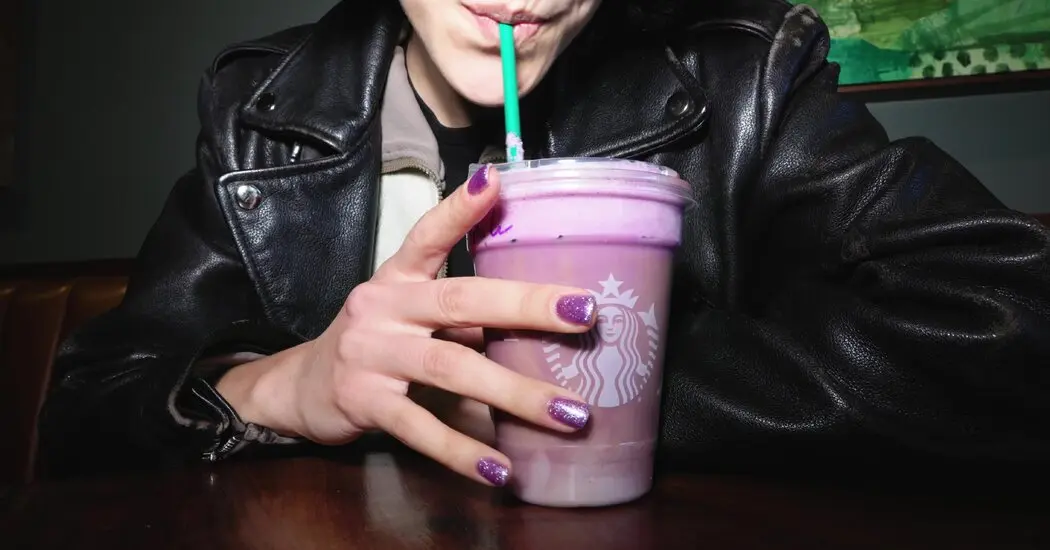
But on the edges, ube has been creeping into the American diet. Trader Joe’s stocked ube ice cream for a few months. Birch Benders sells an ube mochi pancake and waffle mix in stores. And this spring, Starbucks released a limited-time iced ube coconut macchiato.
Big food companies, restaurant chains and even the local coffee shop are battling one another for every dollar. To do that, they need to convince consumers that their sodas, cakes and entrees are unique or more interesting than their competitors’. As a result, a sort of flavor arms race has emerged, with teams of consultants and advisers scouring the globe — or, more aptly, social media posts — for unusual ingredients or combinations.
These new tastes are often sold for only a limited time, a ticking-countdown marketing move that resonates particularly well with millennials and Gen-Z-ers who rush to become one of the first to review the new summer drink or fall snack and post their thoughts on social media.
“Whether it’s Lay’s potato chips or M&M’s or Oreo cookies, manufacturers are constantly coming out with limited-time offerings that are teaching an entire group of consumers to always be looking at the next big thing,” said Mark Webster, a 40-year veteran of the flavor industry who works at T. Hasegawa, a custom-flavor manufacturer with facilities in California.
For restaurants and manufacturers, the risks and rewards for introducing the right flavor at the right time are high.
When Dr Pepper released a strawberries-and-cream version of its classic soda in 2023, the drink generated nearly $300 million in sales and helped propel the brand past Pepsi the next year. But Coca-Cola Spiced, which was supposed to be a raspberry-spice fixture in the company’s portfolio, was pulled after only seven months in 2024.
The ascent of ube as a hot, new flavor has little to do with its subtle blend of mild sweetness, nuttiness and notes of vanilla or its origins. It’s all about the color.
“One of our criteria for new flavors is that the color has to be social media gorgeous, something that influencers gravitate to,” Mr. Webster said.
Ube didn’t just suddenly show up on menus.
Emily Tang, the chief product officer at Datassential, said ube first hit her radar around 2017 when it started popping up in boba tea shops and on a small number of restaurant menus. The breakout came in the spring of 2022 when Baskin-Robbins introduced ube coconut swirl ice cream.
“I thought, ‘Ahhh, now we’re off to the races,’” Ms. Tang said.
After that, ube appeared on more menus in limited-time offerings. For Halloween in 2024, Dunkin’ released Potion Macchiato, featuring a layer of purple marshmallow ube swirl topped by espresso.
Grocers hopped on the ube train. Trader Joe’s rolled out a number of limited-time ube-flavored treats, including ice cream, cookies, ube-covered pretzels and an ube mochi pancake mix.
In 2024, ube was named “Flavor of the Year” by T. Hasegawa and the syrup manufacturer Monin. (The spice maker McCormick declared tamarind the flavor of 2024, while a Dutch flavor manufacturer said it was peach.)
Analysts say a number of flavor megatrends are currently on grocery shelves and restaurant menus. One, called “the mash-up,” combines opposing, unusual and sometimes sort-of-gross flavors. Think hot honey. Or maple bacon. Or, more extreme, Frank’s RedHot Goldfish crackers and Oreo Coca-Cola soda and cookies.
Americans’ interest in Asian foods has become more nuanced, with diners looking beyond a handful of well-known Chinese, Korean and Japanese dishes. They are exploring different flavors, ingredients and more regional dishes as well as foods from Vietnam, Thailand and the Philippines.
“Asian foods and Asian culture have really grown massively here in the U.S., and ube is part of that,” Ms. Tang said. She pointed to the rising popularity of matcha, kimchi, black sesame, yuzu and other ingredients from China, Japan and South Korea.
Obtaining ube isn’t easy. It is mostly grown in the Philippines on small farms, processed in factories there and then shipped to the West Coast, said P.J. Quesada, a co-owner of Ramar Foods, who began importing Filipino food products in the 1970s.
Mr. Quesada added that the more mainstream popularity of ube could spur interest in other products he brings in from the Philippines, including the calamansi, a sort of small, sour lime, and the pili nut, a soft, high-fat nut.
But much of the ube flavor in foods and beverages doesn’t come from the yam itself.
In T. Hasegawa’s low-slung building in an industrial district about 10 miles northwest of Anaheim, Calif., teams of food chemists spend their days trying to create concentrates of flavors — some that exist in nature and others that don’t, like “unicorn” or “glazed donut” — for food and beverage companies.
First, the chemists analyze the composition of real food — on a day in March, it was pomegranate juice — to identify the molecules responsible for aroma and taste. Then, natural extracts, oils and aroma compounds are combined to create concentrated versions of the flavor.
A few drops of cherry or lime concentrate can flavor dozens or hundreds of cans of soda, Mr. Webster explained.
“You can’t just put blood orange juice into an energy drink,” he said. “It would require so much juice that there wouldn’t be enough room for other ingredients.”
Compared with Dubai chocolate, which exploded in popularity a few years ago thanks to TikTok and its photogenic bright-green filling, ube has been more of a “slow burn” flavor, Mr. Webster said. “It had been on our radar for three years before we named it the flavor of the year,” he added.
And as it has with other flavors, the lab has produced multiple versions of ube. Flavors can change or lose their potency, depending on whether they are going into ice cream or baked into a cookie.
These days, Mr. Webster is thinking about the next big flavor.
“Dark sweet cherry,” he said, noting that it is T. Hasegawa’s current flavor of the year. “They’re beautiful and Instagram friendly. Plus, they taste terrific. You will see a lot of cherry things come out in the coming months.”
Few companies are as adept at — and as reliant on — making a food or drink a viral hit as Starbucks. Each quarter, teams consider as many as 125 flavors, said Dana Pellicano, who leads product development at Starbucks.
And even with all of those resources at its fingertips, there are always surprises. Pumpkin Spice, for instance, wasn’t the leading flavor option in its first season on the menu, Ms. Pellicano noted.
Bright-green matcha lattes and frappuccinos have been big hits for Starbucks in recent years. In the first quarter of 2025, after it introduced unsweetened matcha, matcha-based beverage sales rose 40 percent from a year earlier.
Ube first appeared at the company’s Pike Place Market coffeehouse in Seattle in the summer of 2024 in the Halo Halo Frappuccino, named for a popular, cold Filipino dessert. But behind the scenes, Starbucks was still tinkering with the right combination. One version included an ube coconut base topped with banana cold foam and coconut pieces.
Whether ube becomes a permanent part of the menu depends on customer demand. “When a third year outperforms the first or second, that’s a strong signal,” Ms. Pellicano said. “Ube has really been a rocket ship this spring.”
Ms. Leyesa, the bakery owner, has mixed feelings about the purple yam’s going mainstream. Born in the Philippines, she moved to the United States with her family when she was young.
On one hand, she said, she hopes the proliferation of ube brings greater awareness to Filipino cuisine.
“But I also fear that a lot of people don’t know it’s from the Philippines,” Ms. Leyesa said. “If ube takes off on social media because it photographs great and is very social media friendly, but people don’t know it’s from the Philippines, that kind of defeats the purpose.”
Julie Creswell is a business reporter covering the food industry for The Times, writing about all aspects of food, including farming, food inflation, supply-chain disruptions and climate change.
Kevin Draper is a business correspondent covering the agriculture industry. He can be reached at kevin.draper@nytimes.com or kevin.draper@protonmail.com.
Two years ago when Maria Leyesa opened Foodologie in Long Beach, Calif., customers were immediately intrigued by one of her signature bakery items: an ube brownie.
“Ube, ube, ube was a constant question,” Ms. Leyesa said. “Nobody knew what it was.”
The vivid purple yam, pronounced “oo-bay,” has been a Filipino staple for centuries. But the ingredient is not nearly as widely used in the United States, appearing last year on fewer than 2 percent of the menus of restaurants tracked by Datassential, a market research firm in Chicago.
But on the edges, ube has been creeping into the American diet. Trader Joe’s stocked ube ice cream for a few months. Birch Benders sells an ube mochi pancake and waffle mix in stores. And this spring, Starbucks released a limited-time iced ube coconut macchiato.
Big food companies, restaurant chains and even the local coffee shop are battling one another for every dollar. To do that, they need to convince consumers that their sodas, cakes and entrees are unique or more interesting than their competitors’. As a result, a sort of flavor arms race has emerged, with teams of consultants and advisers scouring the globe — or, more aptly, social media posts — for unusual ingredients or combinations.
These new tastes are often sold for only a limited time, a ticking-countdown marketing move that resonates particularly well with millennials and Gen-Z-ers who rush to become one of the first to review the new summer drink or fall snack and post their thoughts on social media.
“Whether it’s Lay’s potato chips or M&M’s or Oreo cookies, manufacturers are constantly coming out with limited-time offerings that are teaching an entire group of consumers to always be looking at the next big thing,” said Mark Webster, a 40-year veteran of the flavor industry who works at T. Hasegawa, a custom-flavor manufacturer with facilities in California.
For restaurants and manufacturers, the risks and rewards for introducing the right flavor at the right time are high.
When Dr Pepper released a strawberries-and-cream version of its classic soda in 2023, the drink generated nearly $300 million in sales and helped propel the brand past Pepsi the next year. But Coca-Cola Spiced, which was supposed to be a raspberry-spice fixture in the company’s portfolio, was pulled after only seven months in 2024.
The ascent of ube as a hot, new flavor has little to do with its subtle blend of mild sweetness, nuttiness and notes of vanilla or its origins. It’s all about the color.
“One of our criteria for new flavors is that the color has to be social media gorgeous, something that influencers gravitate to,” Mr. Webster said.
Ube didn’t just suddenly show up on menus.
Emily Tang, the chief product officer at Datassential, said ube first hit her radar around 2017 when it started popping up in boba tea shops and on a small number of restaurant menus. The breakout came in the spring of 2022 when Baskin-Robbins introduced ube coconut swirl ice cream.
“I thought, ‘Ahhh, now we’re off to the races,’” Ms. Tang said.
After that, ube appeared on more menus in limited-time offerings. For Halloween in 2024, Dunkin’ released Potion Macchiato, featuring a layer of purple marshmallow ube swirl topped by espresso.
Grocers hopped on the ube train. Trader Joe’s rolled out a number of limited-time ube-flavored treats, including ice cream, cookies, ube-covered pretzels and an ube mochi pancake mix.
In 2024, ube was named “Flavor of the Year” by T. Hasegawa and the syrup manufacturer Monin. (The spice maker McCormick declared tamarind the flavor of 2024, while a Dutch flavor manufacturer said it was peach.)
Analysts say a number of flavor megatrends are currently on grocery shelves and restaurant menus. One, called “the mash-up,” combines opposing, unusual and sometimes sort-of-gross flavors. Think hot honey. Or maple bacon. Or, more extreme, Frank’s RedHot Goldfish crackers and Oreo Coca-Cola soda and cookies.
Americans’ interest in Asian foods has become more nuanced, with diners looking beyond a handful of well-known Chinese, Korean and Japanese dishes. They are exploring different flavors, ingredients and more regional dishes as well as foods from Vietnam, Thailand and the Philippines.
“Asian foods and Asian culture have really grown massively here in the U.S., and ube is part of that,” Ms. Tang said. She pointed to the rising popularity of matcha, kimchi, black sesame, yuzu and other ingredients from China, Japan and South Korea.
Obtaining ube isn’t easy. It is mostly grown in the Philippines on small farms, processed in factories there and then shipped to the West Coast, said P.J. Quesada, a co-owner of Ramar Foods, who began importing Filipino food products in the 1970s.
Mr. Quesada added that the more mainstream popularity of ube could spur interest in other products he brings in from the Philippines, including the calamansi, a sort of small, sour lime, and the pili nut, a soft, high-fat nut.
But much of the ube flavor in foods and beverages doesn’t come from the yam itself.
In T. Hasegawa’s low-slung building in an industrial district about 10 miles northwest of Anaheim, Calif., teams of food chemists spend their days trying to create concentrates of flavors — some that exist in nature and others that don’t, like “unicorn” or “glazed donut” — for food and beverage companies.
First, the chemists analyze the composition of real food — on a day in March, it was pomegranate juice — to identify the molecules responsible for aroma and taste. Then, natural extracts, oils and aroma compounds are combined to create concentrated versions of the flavor.
A few drops of cherry or lime concentrate can flavor dozens or hundreds of cans of soda, Mr. Webster explained.
“You can’t just put blood orange juice into an energy drink,” he said. “It would require so much juice that there wouldn’t be enough room for other ingredients.”
Compared with Dubai chocolate, which exploded in popularity a few years ago thanks to TikTok and its photogenic bright-green filling, ube has been more of a “slow burn” flavor, Mr. Webster said. “It had been on our radar for three years before we named it the flavor of the year,” he added.
And as it has with other flavors, the lab has produced multiple versions of ube. Flavors can change or lose their potency, depending on whether they are going into ice cream or baked into a cookie.
These days, Mr. Webster is thinking about the next big flavor.
“Dark sweet cherry,” he said, noting that it is T. Hasegawa’s current flavor of the year. “They’re beautiful and Instagram friendly. Plus, they taste terrific. You will see a lot of cherry things come out in the coming months.”
Few companies are as adept at — and as reliant on — making a food or drink a viral hit as Starbucks. Each quarter, teams consider as many as 125 flavors, said Dana Pellicano, who leads product development at Starbucks.
And even with all of those resources at its fingertips, there are always surprises. Pumpkin Spice, for instance, wasn’t the leading flavor option in its first season on the menu, Ms. Pellicano noted.
Bright-green matcha lattes and frappuccinos have been big hits for Starbucks in recent years. In the first quarter of 2025, after it introduced unsweetened matcha, matcha-based beverage sales rose 40 percent from a year earlier.
Ube first appeared at the company’s Pike Place Market coffeehouse in Seattle in the summer of 2024 in the Halo Halo Frappuccino, named for a popular, cold Filipino dessert. But behind the scenes, Starbucks was still tinkering with the right combination. One version included an ube coconut base topped with banana cold foam and coconut pieces.
Whether ube becomes a permanent part of the menu depends on customer demand. “When a third year outperforms the first or second, that’s a strong signal,” Ms. Pellicano said. “Ube has really been a rocket ship this spring.”
Ms. Leyesa, the bakery owner, has mixed feelings about the purple yam’s going mainstream. Born in the Philippines, she moved to the United States with her family when she was young.
On one hand, she said, she hopes the proliferation of ube brings greater awareness to Filipino cuisine.
“But I also fear that a lot of people don’t know it’s from the Philippines,” Ms. Leyesa said. “If ube takes off on social media because it photographs great and is very social media friendly, but people don’t know it’s from the Philippines, that kind of defeats the purpose.”
Julie Creswell is a business reporter covering the food industry for The Times, writing about all aspects of food, including farming, food inflation, supply-chain disruptions and climate change.
Kevin Draper is a business correspondent covering the agriculture industry. He can be reached at kevin.draper@nytimes.com or kevin.draper@protonmail.com.