영국 인근서 적발된 러시아 잠수함 3척, 정보 수집 목적이었다고 영국 주장
3 Russian Submarines Detected Near Britain Were Spying, U.K. Says
The New York Times
Michael D. Shear
EN
2026-04-09 12:45
Translated
존 힐리 국방장관은 해당 잠수함들이 해저 핵심 송유관과 통신 케이블에 대한 정보를 수집하고 있었다고 밝혔다.
The British military spent more than a month tracking Russian efforts to spy on critical undersea pipelines and telecommunication lines on the floor of the northern Atlantic Ocean, Defense Secretary John Healey revealed on Thursday.
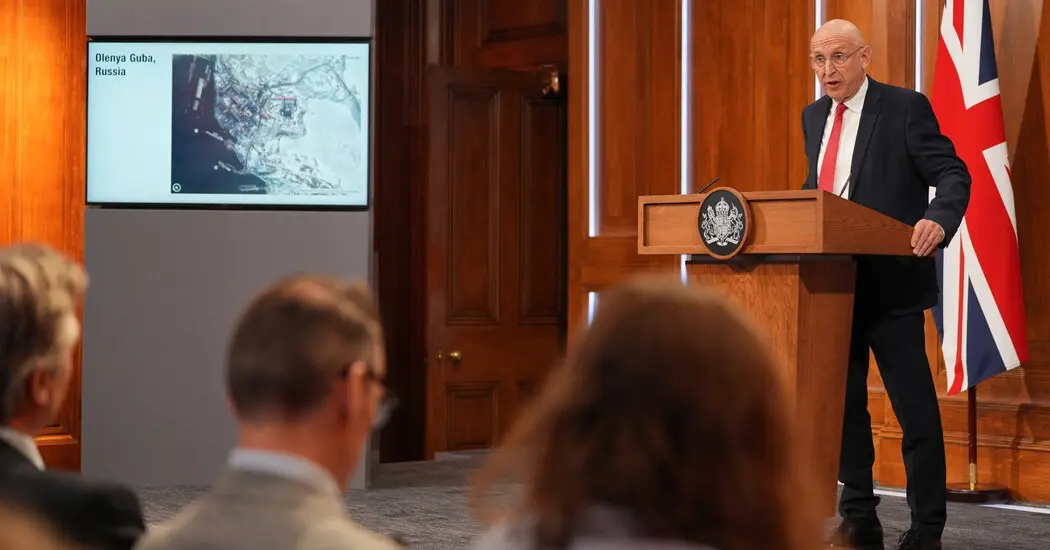
Mr. Healey displayed photographs of Russian vessels that he said were part of a covert operation to gather information about the underwater infrastructure. He said the British military response, in cooperation with Norway and other allies, exposed attempts at information gathering by Russia’s president, Vladimir V. Putin.
“Our armed forces left them in no doubt that they were being monitored, that their movements were not covert, as President Putin planned,” Mr. Healey told reporters. “I’m making the statement to call out this Russian activity. And to President Putin, I say we see you. We see your activity over our cables and our pipelines.”
He said there was no evidence that the Russian submarines did anything but gather information about the cables and pipelines, and that the British military did not engage them. But he said the message to Russia was that “any attempt to damage them will not be tolerated and will have serious consequences.”
The British military has been criticized by opposition political leaders, and by President Trump for not dedicating more of its resources to the Middle East during the American and Israeli-led war against Iran. Mr. Healey said he was revealing the military operation in the Atlantic partly as a response to that criticism.
“I understand people questioning why all U.K. military assets and personnel have not been deployed to deal with it, but that is not in Britain’s national interest,” he said. “The greatest threats are often unseen and silent.”
Kremlin Spokesman Dmitri S. Peskov did not immediately respond to a request for comment on Mr. Healey’s allegations.
Officials across Europe have cited Russian espionage and military operations in the northern Atlantic as a key threat to the continent and to NATO. Mr. Trump claimed last year that his repeated demands for control of Greenland were due to a fear that NATO’s European members were not doing enough to stop Mr. Putin’s activities there, although experts pointed out that the United States already has sweeping military access to Greenland.
Mr. Trump, angry at Mr. Starmer for his refusal to join the initial U.S.-Israeli strikes against Iran, has taken particular aim at the British military in recent weeks, calling its warships “toys” and saying that they are old and decrepit. Mr. Healey said on Thursday that the military’s ability to monitor the Russian submarines “24-7” was evidence that Mr. Trump was wrong.
“I reject the descriptions that have been leveled against them,” he said. “Our operation that I’m setting out today reinforces the seriousness with which we take the Russian threat.”
Mr. Healey also said that he believes Mr. Putin was taking advantage of the conflict in the Middle East by timing his North Atlantic spying at a time that he thought his adversaries would be distracted.
“Putin would want us to be distracted by the Middle East,” Mr. Healey said. “We are not just exposing his covert operation, but we are saying to him that we recognize Russia as the primary threat to the U.K. and to NATO, and that we will not take our eyes off Putin.”
The defense secretary declined to say exactly where the Russian submarines were discovered or what cables or pipelines they were spying on.
Two of the submarines were part of Russia’s Main Directorate of Deep Sea Research, Mr. Healey said. A third vessel was a Russian attack submarine that the British military concluded was meant to distract from the activities of the other two.
Mr. Healey said the Russian operation was aimed at gathering information, during peacetime, on the network of cables and pipelines that crisscross the world’s oceans so that Russia would be able to rapidly damage or destroy them during a future conflict.
Britain deployed a frigate, a tanker, helicopters and aircraft to track the Russian submarines, the ministry of defense said. The British ships also deployed sonar buoys to track the submarines over thousands of miles.
The submarines eventually left the area and headed back toward Russia, Mr. Healey said.
Michael D. Shear is the chief U.K. correspondent for The New York Times, covering British politics and culture and diplomacy around the world.
Mr. Healey displayed photographs of Russian vessels that he said were part of a covert operation to gather information about the underwater infrastructure. He said the British military response, in cooperation with Norway and other allies, exposed attempts at information gathering by Russia’s president, Vladimir V. Putin.
“Our armed forces left them in no doubt that they were being monitored, that their movements were not covert, as President Putin planned,” Mr. Healey told reporters. “I’m making the statement to call out this Russian activity. And to President Putin, I say we see you. We see your activity over our cables and our pipelines.”
He said there was no evidence that the Russian submarines did anything but gather information about the cables and pipelines, and that the British military did not engage them. But he said the message to Russia was that “any attempt to damage them will not be tolerated and will have serious consequences.”
The British military has been criticized by opposition political leaders, and by President Trump for not dedicating more of its resources to the Middle East during the American and Israeli-led war against Iran. Mr. Healey said he was revealing the military operation in the Atlantic partly as a response to that criticism.
“I understand people questioning why all U.K. military assets and personnel have not been deployed to deal with it, but that is not in Britain’s national interest,” he said. “The greatest threats are often unseen and silent.”
Kremlin Spokesman Dmitri S. Peskov did not immediately respond to a request for comment on Mr. Healey’s allegations.
Officials across Europe have cited Russian espionage and military operations in the northern Atlantic as a key threat to the continent and to NATO. Mr. Trump claimed last year that his repeated demands for control of Greenland were due to a fear that NATO’s European members were not doing enough to stop Mr. Putin’s activities there, although experts pointed out that the United States already has sweeping military access to Greenland.
Mr. Trump, angry at Mr. Starmer for his refusal to join the initial U.S.-Israeli strikes against Iran, has taken particular aim at the British military in recent weeks, calling its warships “toys” and saying that they are old and decrepit. Mr. Healey said on Thursday that the military’s ability to monitor the Russian submarines “24-7” was evidence that Mr. Trump was wrong.
“I reject the descriptions that have been leveled against them,” he said. “Our operation that I’m setting out today reinforces the seriousness with which we take the Russian threat.”
Mr. Healey also said that he believes Mr. Putin was taking advantage of the conflict in the Middle East by timing his North Atlantic spying at a time that he thought his adversaries would be distracted.
“Putin would want us to be distracted by the Middle East,” Mr. Healey said. “We are not just exposing his covert operation, but we are saying to him that we recognize Russia as the primary threat to the U.K. and to NATO, and that we will not take our eyes off Putin.”
The defense secretary declined to say exactly where the Russian submarines were discovered or what cables or pipelines they were spying on.
Two of the submarines were part of Russia’s Main Directorate of Deep Sea Research, Mr. Healey said. A third vessel was a Russian attack submarine that the British military concluded was meant to distract from the activities of the other two.
Mr. Healey said the Russian operation was aimed at gathering information, during peacetime, on the network of cables and pipelines that crisscross the world’s oceans so that Russia would be able to rapidly damage or destroy them during a future conflict.
Britain deployed a frigate, a tanker, helicopters and aircraft to track the Russian submarines, the ministry of defense said. The British ships also deployed sonar buoys to track the submarines over thousands of miles.
The submarines eventually left the area and headed back toward Russia, Mr. Healey said.
Michael D. Shear is the chief U.K. correspondent for The New York Times, covering British politics and culture and diplomacy around the world.